

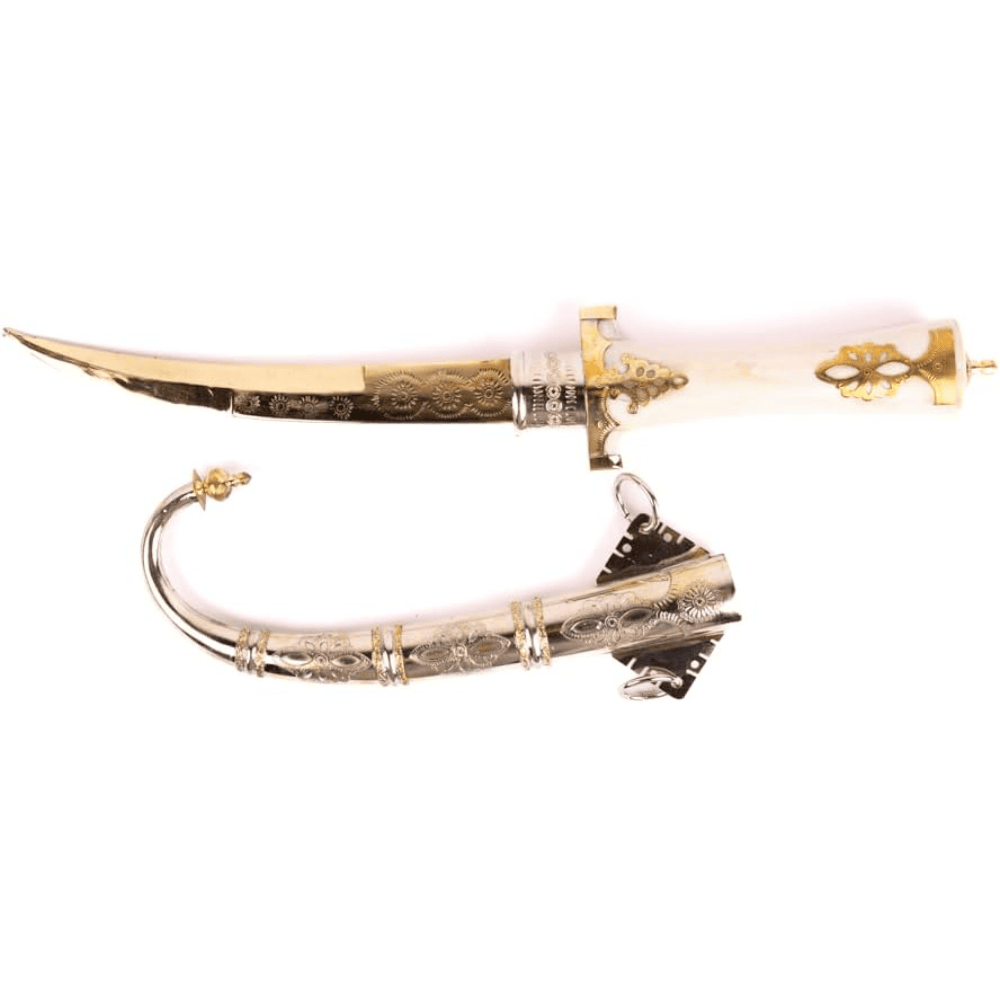
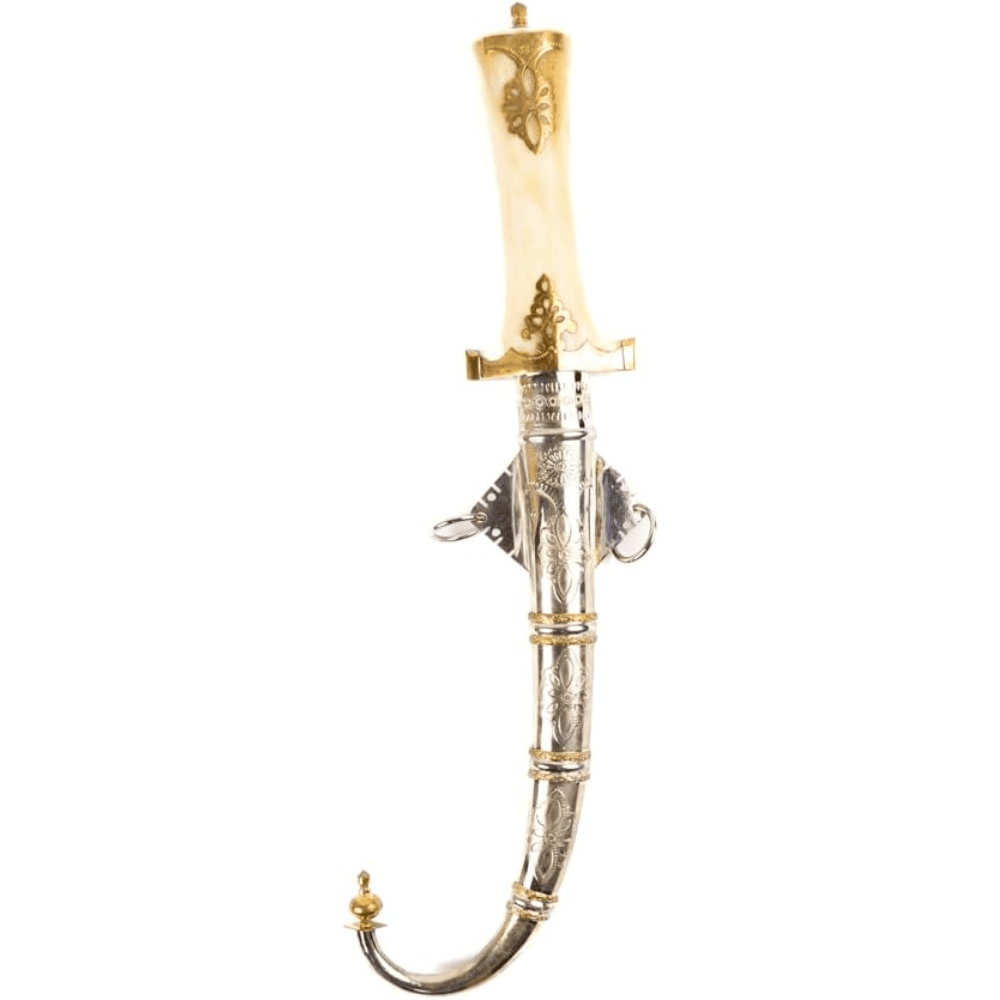
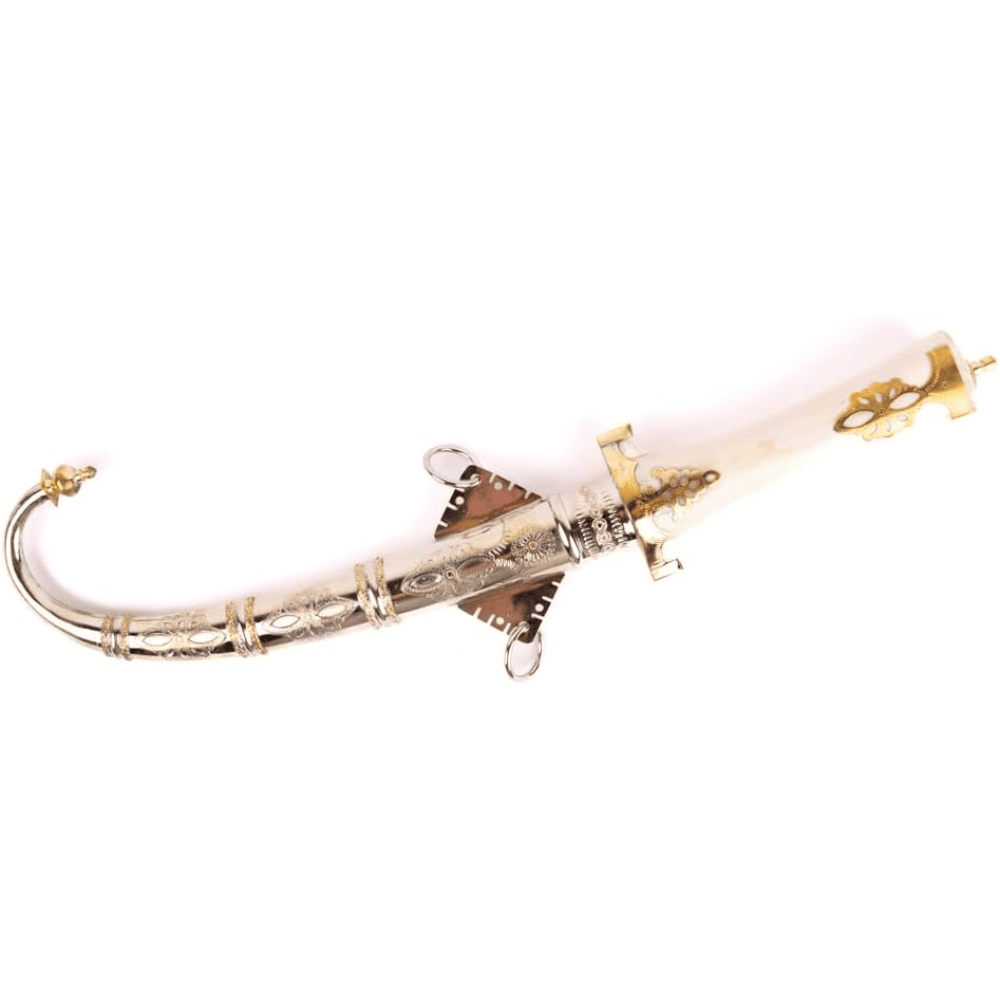
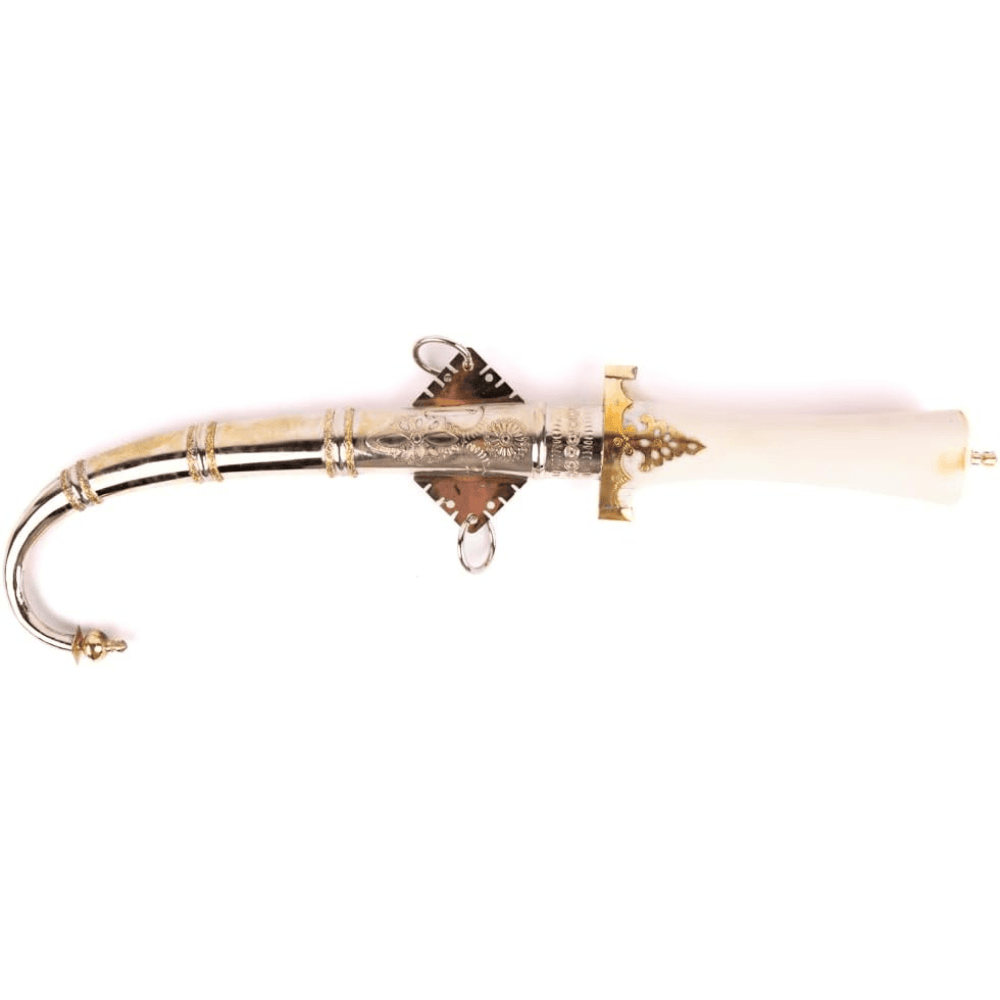
What defines the cultural identity behind this Moroccan handmade dagger?

This Moroccan dagger reflects a long-standing craft tradition connected to North African and Islamic history.
The jambiya-style shape is widely recognized across the Arab world, yet Moroccan interpretations show distinct
visual traits formed by local artisans. The curved blade, balanced proportions, and choice of traditional
handle materials are deliberate decisions rooted in heritage rather than function.
Historically, such daggers symbolized status, identity, and craftsmanship. In Morocco, they were often worn
with traditional attire or displayed in homes during religious and cultural occasions. The use of bone for
the handle reflects older material practices that existed long before modern synthetic alternatives.
Stainless steel supports durability while preserving a traditional visual profile.
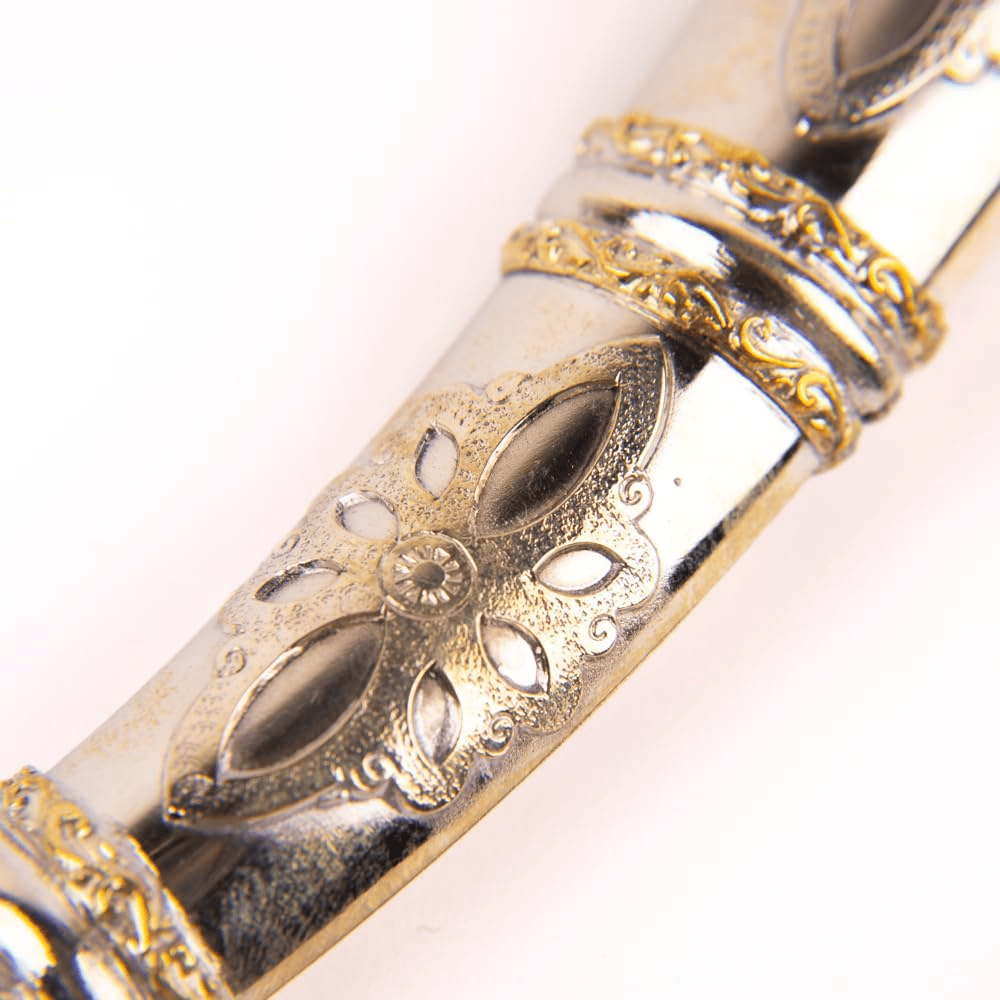
This dagger functions as a cultural object rather than a utility tool. Minor surface variations, light
oxidation, or tool marks are expected in handmade Moroccan pieces. These characteristics highlight manual
shaping and finishing, distinguishing the item from factory-made replicas.
- Rooted in Moroccan and Islamic decorative traditions
- Jambiya-inspired curved blade design
- Symbolic and ornamental purpose
- Handmade identity visible in surface details
How does the stainless steel blade affect durability and appearance?
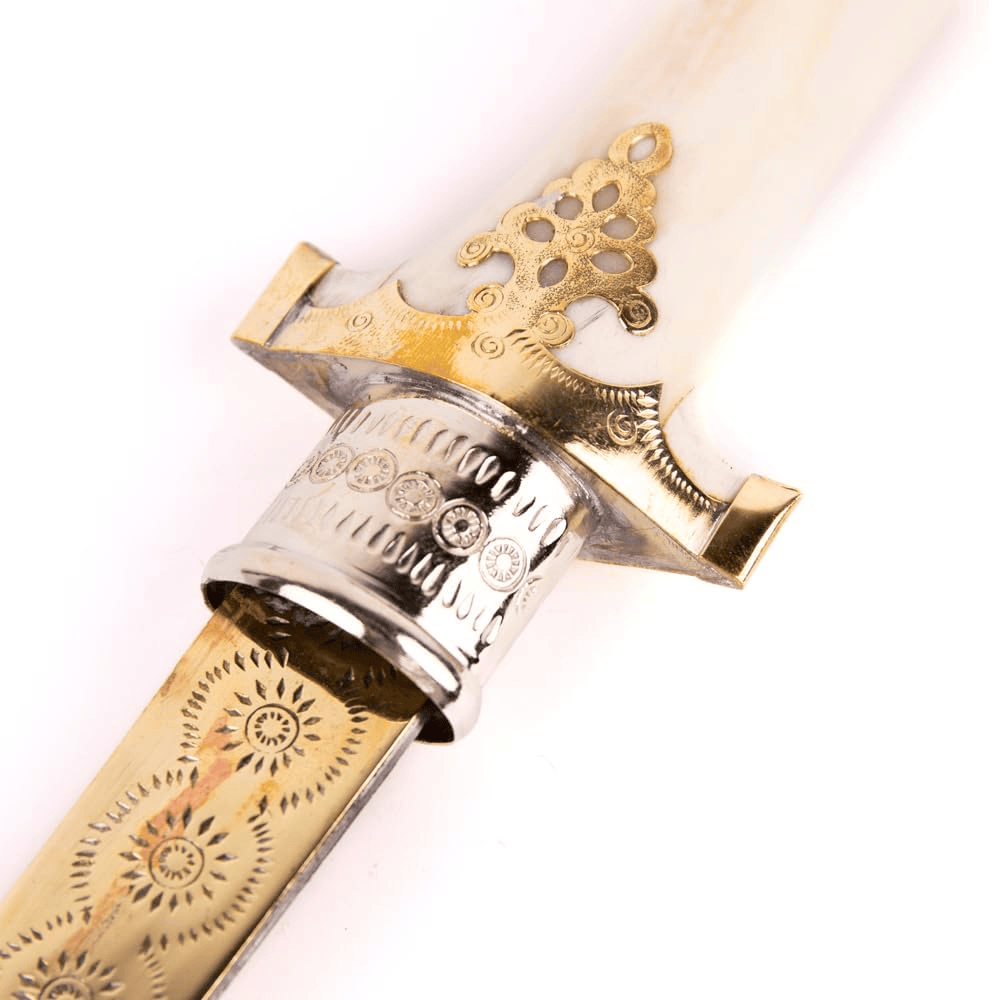
The blade is made from stainless steel, selected for its resistance to corrosion and its ability to maintain
structural stability over time. Compared to carbon steel, stainless steel slows oxidation, making it suitable
for long-term decorative display in indoor environments without demanding constant care.
The blade thickness provides rigidity while maintaining balanced weight. It gives the dagger a solid visual
presence without appearing oversized or aggressive. Light surface rust may still occur due to hand-forging,
storage conditions, or climate exposure, which is normal and does not compromise the blade.
The blade length follows traditional ceremonial proportions, prioritizing harmony with the handle and
scabbard. Visible grind marks or uneven polish indicate manual shaping, confirming that the blade was not
machine-pressed or mass-produced.
- Stainless steel supports long-term stability
- Balanced blade thickness enhances structure
- Traditional proportions preserved
- Surface marks reflect handmade production
Why is a bone handle significant in Moroccan dagger craftsmanship?
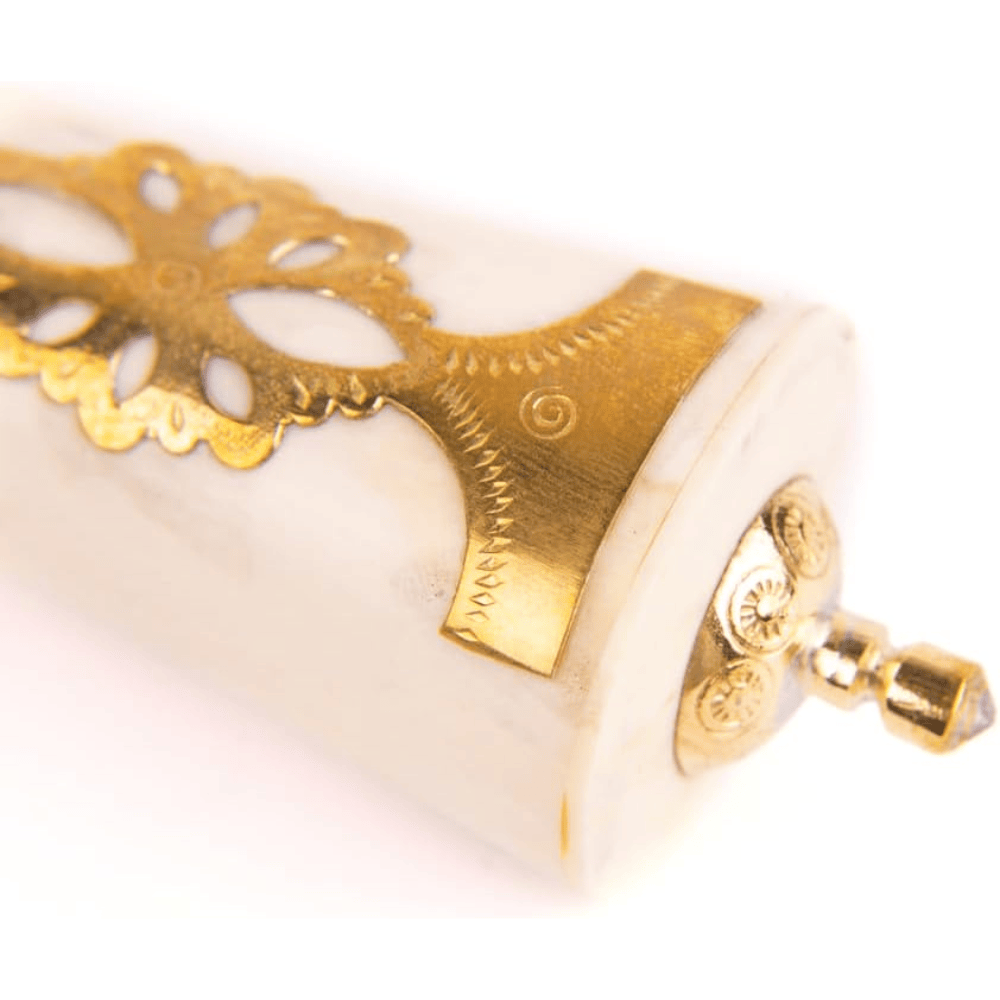
Bone has been used in Moroccan dagger handles for generations due to its availability, durability, and
symbolic value. Unlike plastic or resin, bone develops natural tonal changes over time, giving each handle
a distinct appearance that cannot be replicated.
The black bone handle creates contrast with the metal blade and scabbard. It is shaped by hand, resulting
in a smooth contour rather than a uniform molded finish. Slight differences in texture or tone are expected
and show that the handle was cut, sanded, and polished manually.
Bone offers a balance between strength and refinement, making it suitable for decorative use when kept in
stable indoor conditions. Its presence signals adherence to traditional materials rather than modern
substitutes.
- Natural bone used instead of synthetic materials
- Each handle has unique texture and tone
- Hand-shaped grip with traditional proportions
- Material choice reflects historical accuracy
How do handmade imperfections add value rather than reduce quality?
Handmade Moroccan daggers are not created under factory tolerances. Small asymmetries, surface variations,
or tool marks are part of the traditional crafting process. These details show direct artisan involvement
at every stage of production.
Visible imperfections confirm originality. A perfectly uniform surface would indicate machine production,
which reduces cultural and collectible value. In Moroccan craft traditions, handwork is a sign of
authenticity rather than a flaw.
Each dagger becomes a unique object rather than a repeated replica. This individuality aligns with
historical workshop practices and appeals to collectors who value character and heritage.
- Handmade marks confirm authenticity
- Variations reflect manual craftsmanship
- No two pieces are identical
- Cultural value increases with individuality
How do the dimensions support balance and display suitability?
The overall length gives the dagger a strong visual presence while remaining easy to display. It works well
on wall mounts, shelves, or display stands without overwhelming surrounding décor.
The hilt length supports visual balance, even though the dagger is not intended for active handling. The
blade-to-handle ratio follows traditional jambiya proportions, while the scabbard fully covers the blade
with a slim, proportional profile.
These dimensions make the dagger suitable for collectors, themed interiors, and cultural displays,
integrating naturally into various decorative settings.
- Balanced proportions for visual harmony
- Suitable size for home display
- Traditional blade-to-handle ratio
- Easy integration into décor settings
What role does the scabbard play in overall presentation?
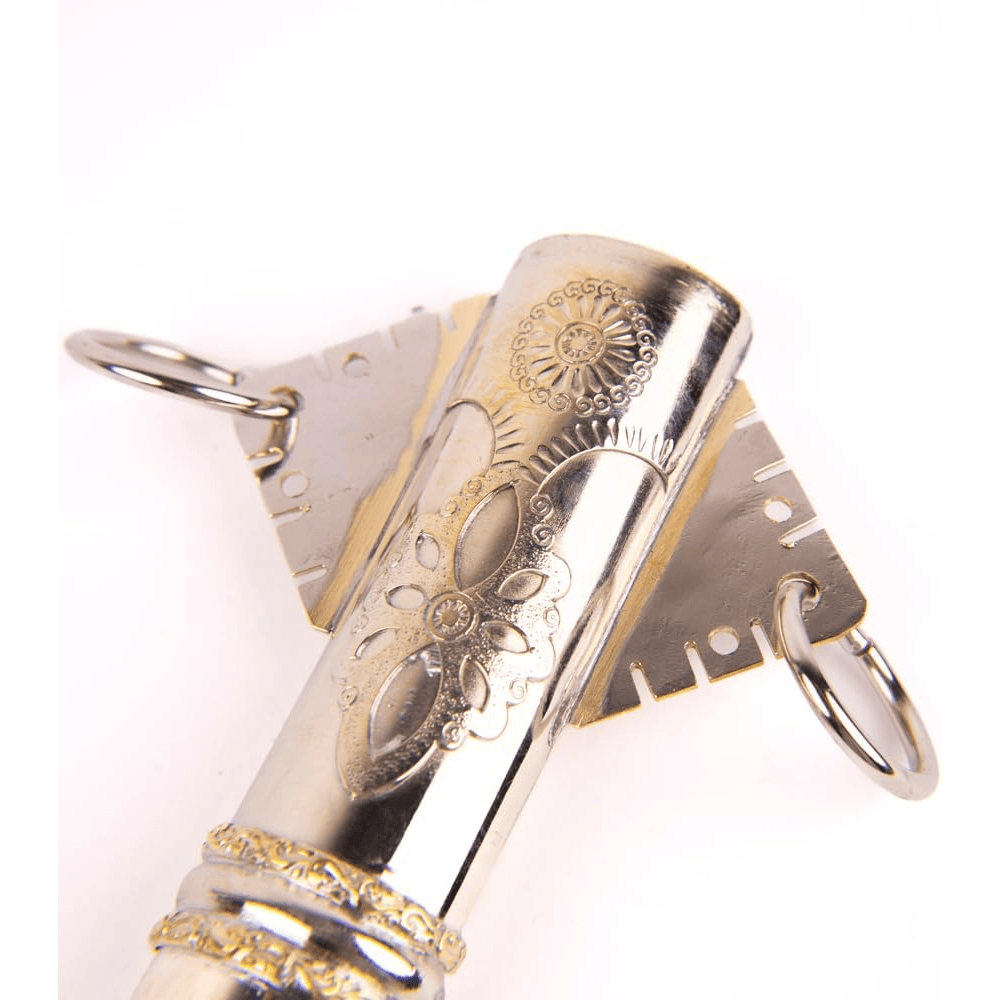
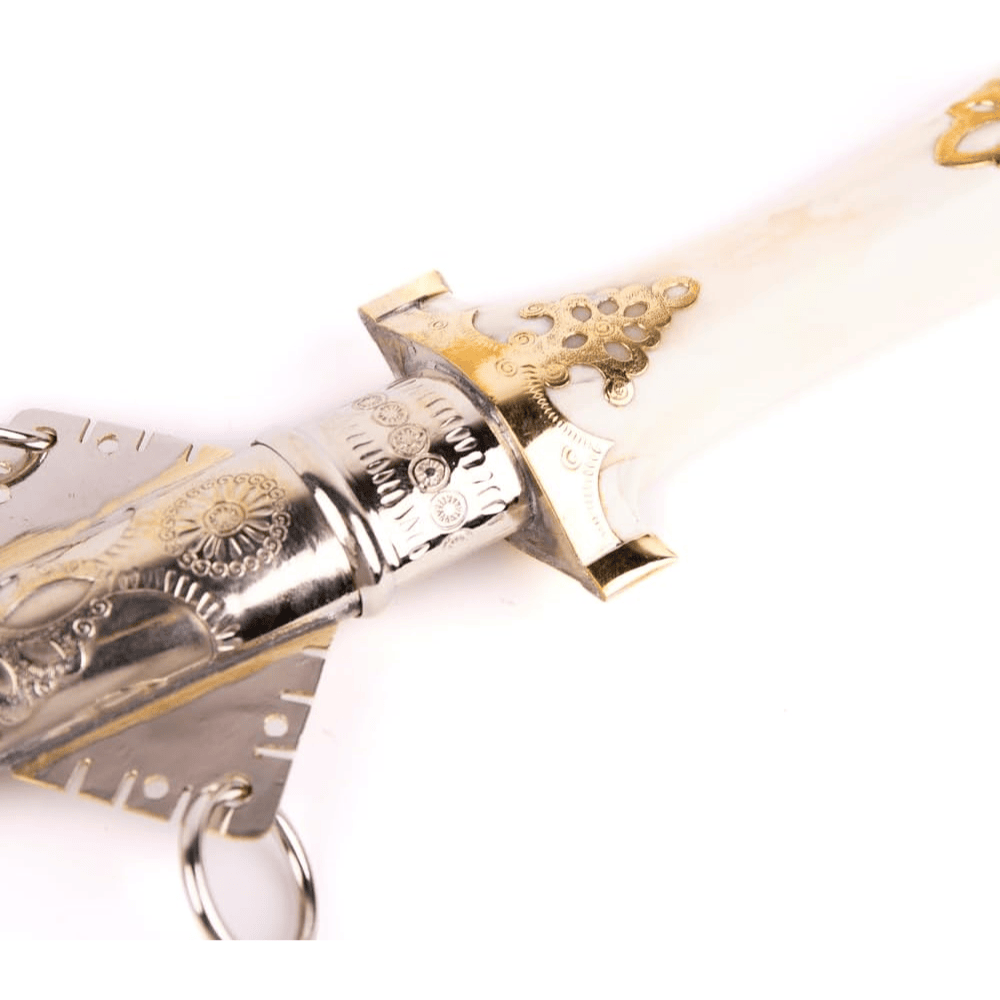
The scabbard completes the visual identity of the dagger. Its fit aligns closely with the blade, preventing
unnecessary movement and maintaining a clean silhouette.
In Moroccan traditions, the scabbard carries visual importance equal to the blade. It frames the dagger
when displayed and supports structured presentation on flat or mounted surfaces.
Together with the blade and handle, the scabbard reinforces the ceremonial and decorative nature of the
piece.
- Completes the dagger’s visual form
- Supports safe and stable storage
- Enhances decorative presentation
- Handmade finish complements the blade
How does this dagger fit within Islamic and Arabic decorative themes?
Islamic and Arabic decorative traditions emphasize balance, symbolism, and craftsmanship. This dagger
reflects those values through its restrained design and traditional materials.
Historically associated with formal attire and cultural ceremonies, such daggers now serve as heritage
display objects. The curved blade and bone handle reflect regional designs adapted by Moroccan artisans.
This makes the dagger suitable for collections focused on Islamic art, Arabic history, or Moroccan
craftsmanship.
- Rooted in Islamic and Arabic heritage
- Designed for symbolic display
- Balanced and restrained aesthetic
- Suitable for cultural collections
Why are color variation and surface marks expected characteristics?
Lighting conditions, screen settings, and natural materials influence color perception. Bone and metal
surfaces may appear lighter or darker depending on angle and environment.
Surface marks, grain patterns, and tonal shifts confirm the use of natural materials. Bone and steel age
differently than synthetic materials, and these visible traits are part of the dagger’s identity.
Images represent the general form and finish, while minor visual differences are normal upon inspection.
- Natural materials create tonal variation
- Lighting affects visual appearance
- Surface marks confirm authenticity
- No impact on structural quality
How should this dagger be handled and maintained for longevity?
This dagger is intended for decorative handling only. Gentle cleaning with a dry cloth helps maintain its
appearance. Light surface oxidation can be addressed with minimal, non-abrasive care.
Bone handles should be kept away from excess moisture and prolonged direct sunlight. Stable indoor
conditions help preserve both blade and handle materials.
Proper storage allows the dagger to age naturally without compromising its structure.
- Decorative handling only
- Dry storage recommended
- Avoid moisture and direct sunlight
- Gentle maintenance preserves finish
Who is this Moroccan dagger best suited for?
This dagger suits collectors, cultural enthusiasts, and interior decorators seeking authentic Moroccan
artifacts. It works well in educational settings, themed décor, or private collections.
It is not intended for functional cutting. Its value lies in craftsmanship, cultural meaning, and visual
presence rather than practical use.
The piece serves as a cultural reference that reflects traditional Moroccan artistry through material
choice and manual production.
- Suitable for collectors and decorators
- Focused on cultural and visual value
- Not intended for practical use
- Reflects traditional Moroccan craftsmanship
Reviews
There are no reviews yet.