

What makes this Moroccan Berber dagger a real handcrafted decorative piece?

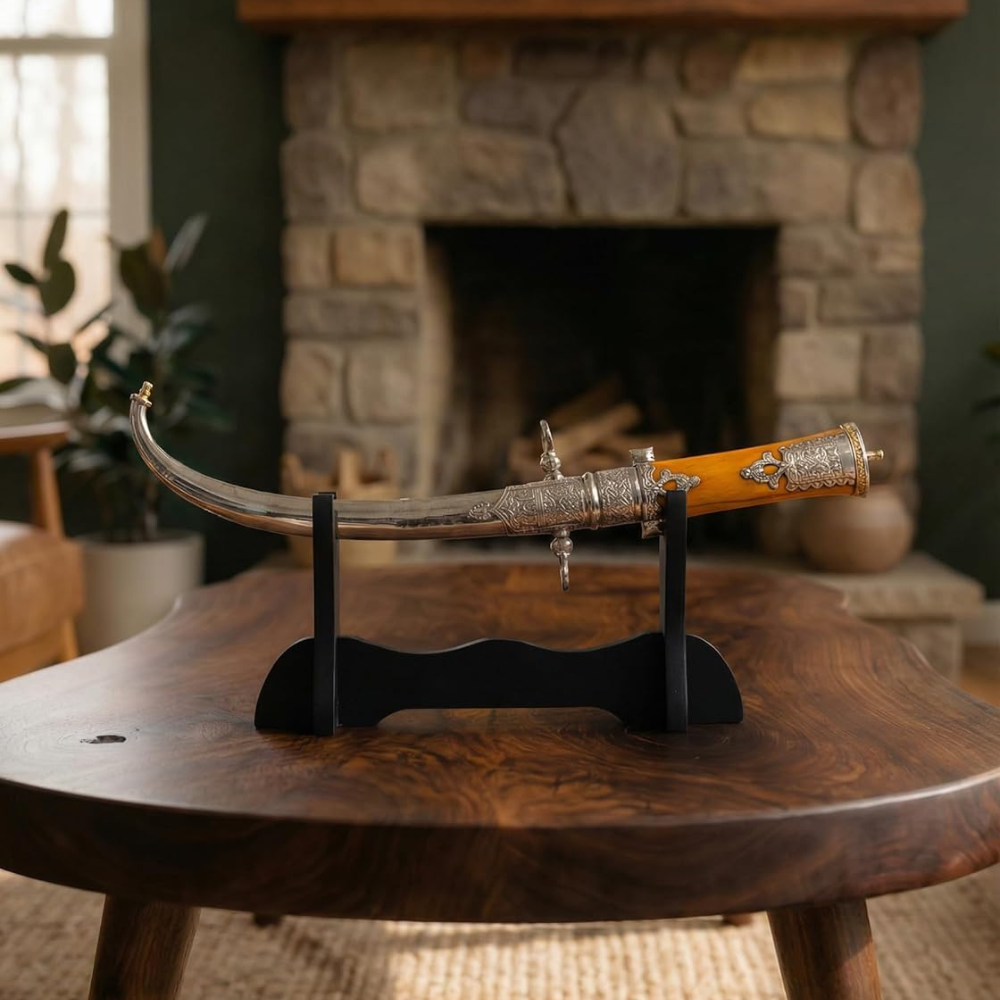
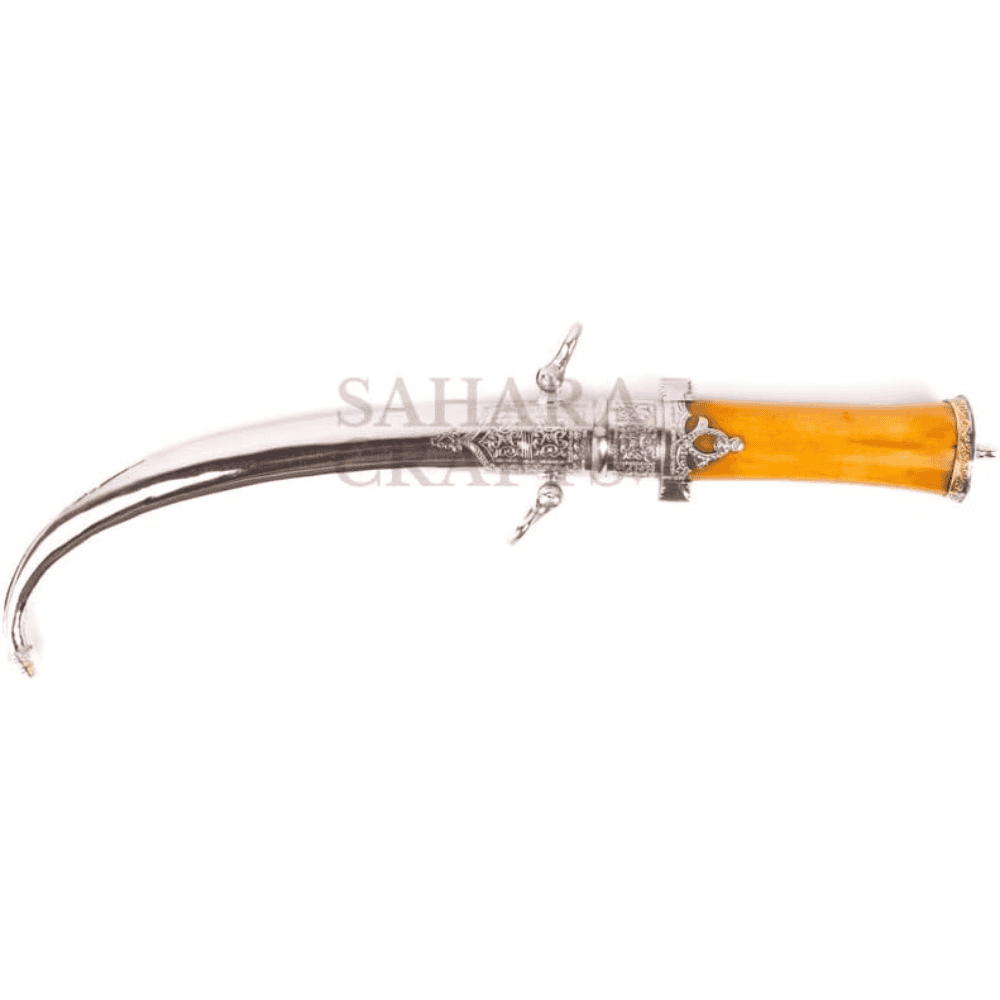
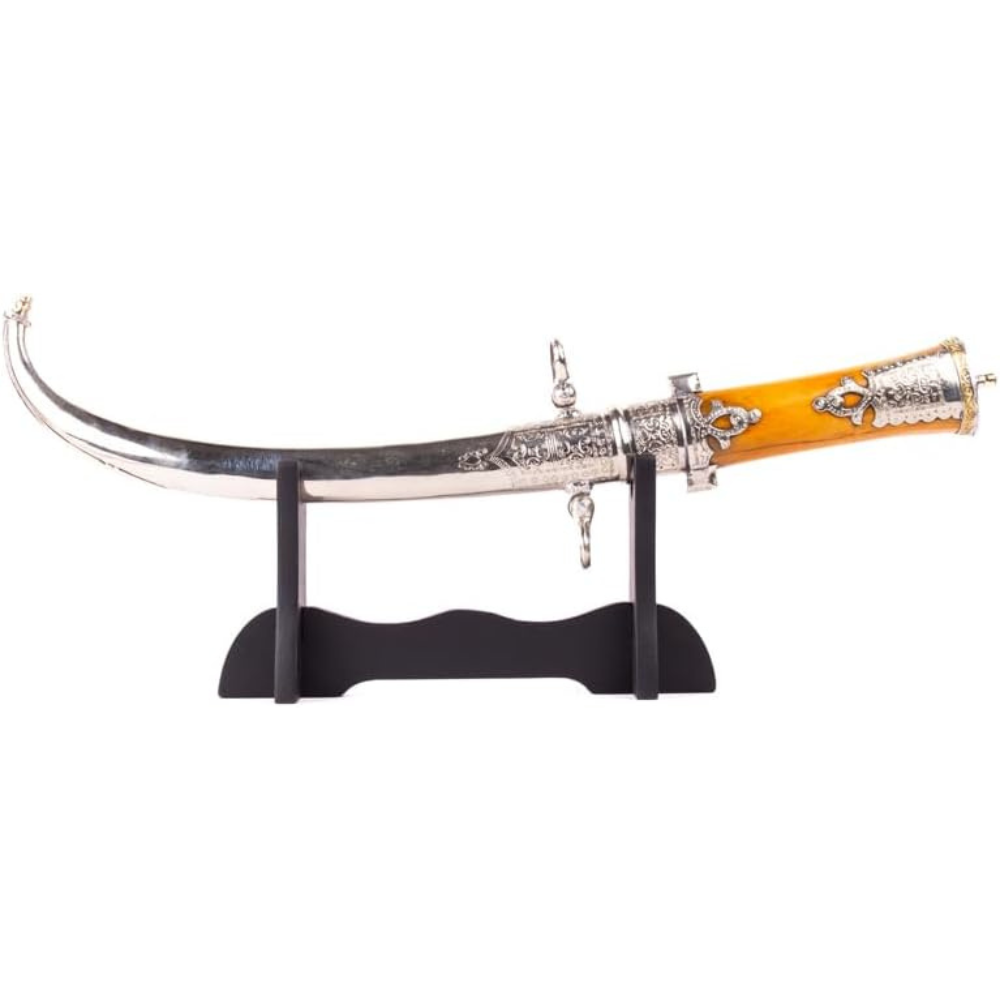
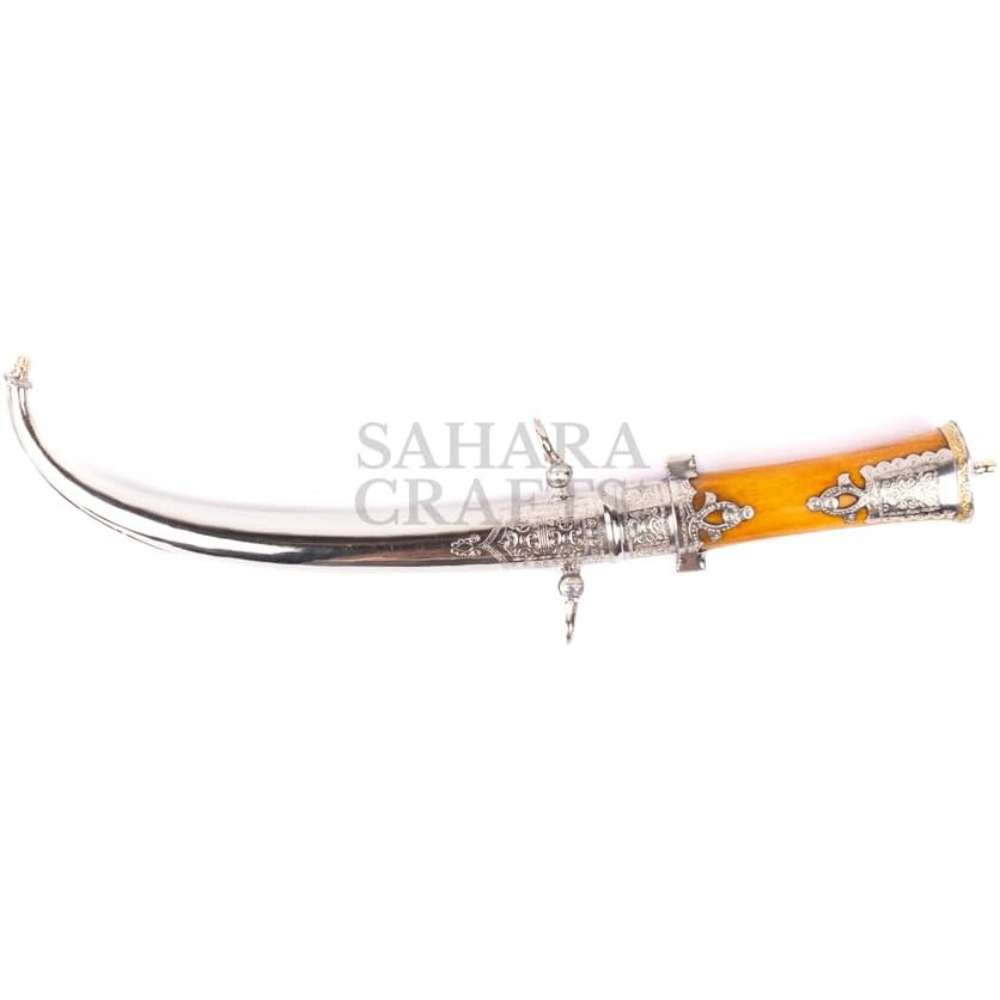
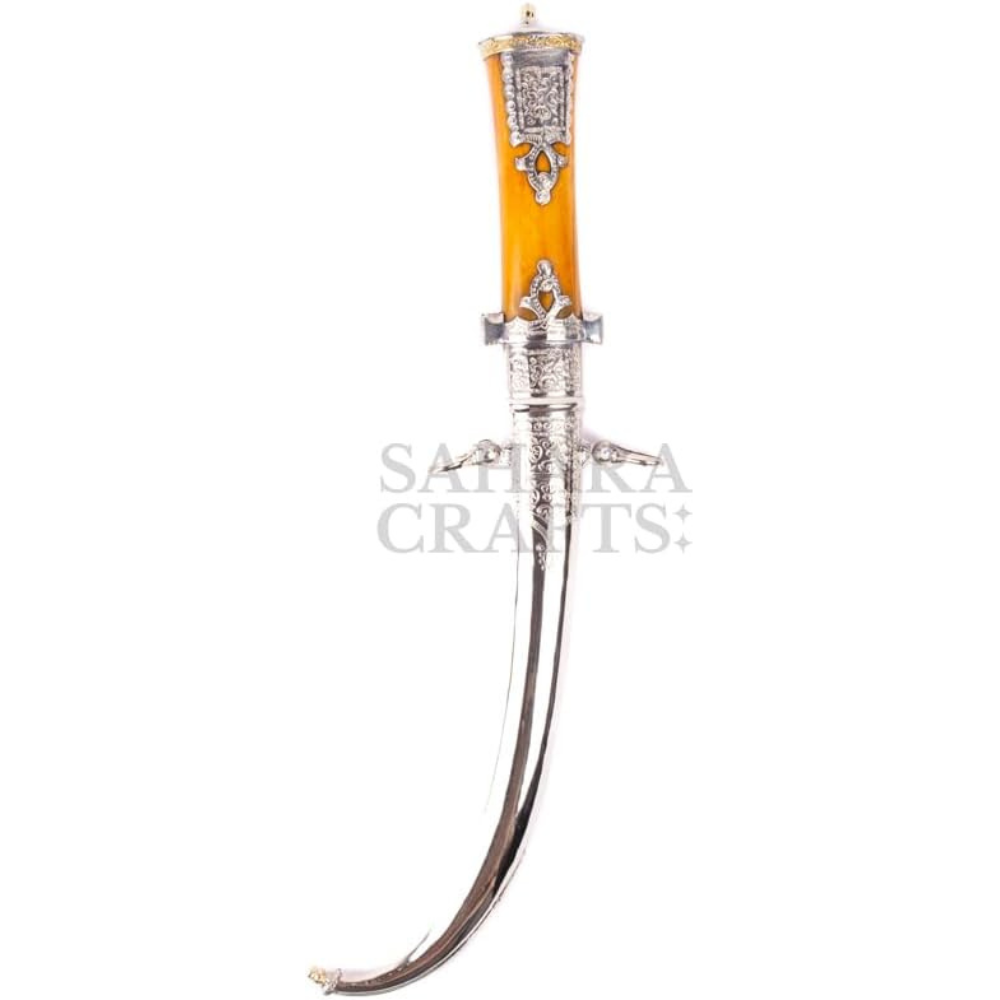
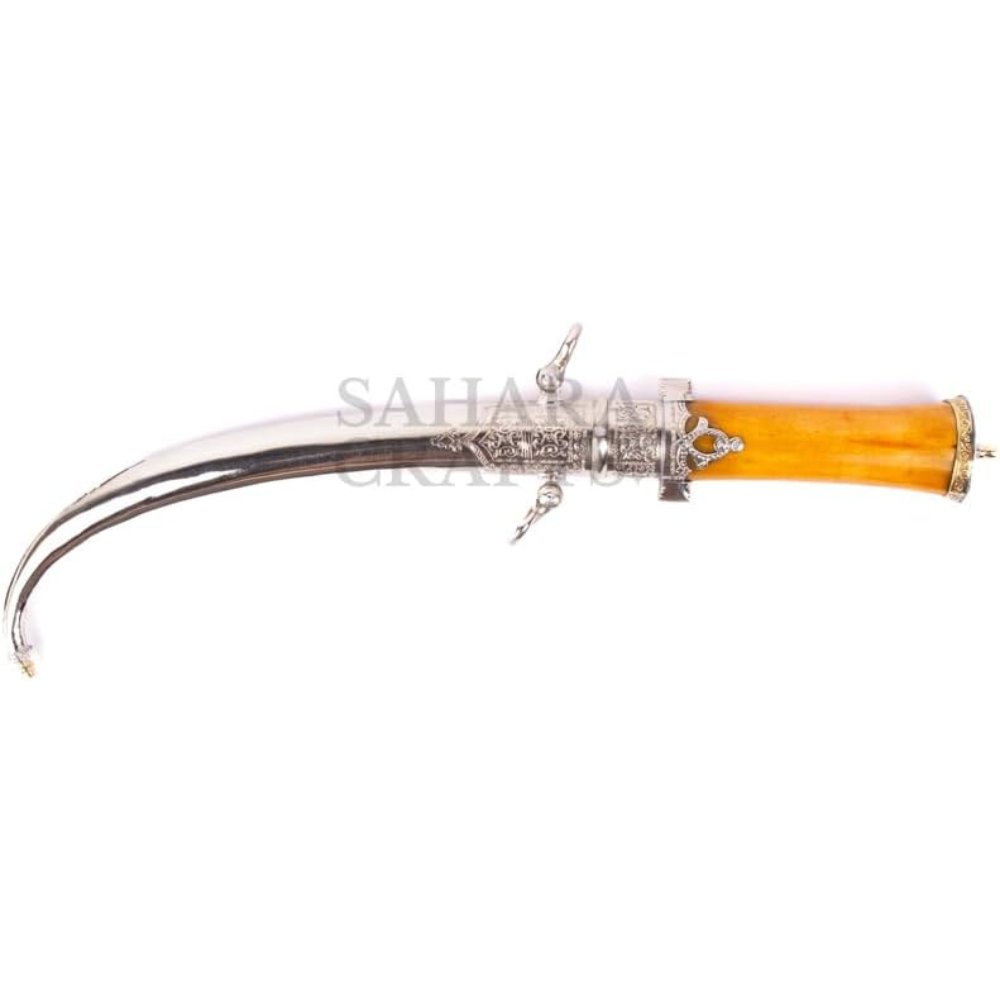
This Moroccan decorative dagger is made to represent traditional Berber and Arabic craftsmanship. It follows the style of the famous Koumya or Jambiya dagger, a cultural blade design that is strongly connected to Moroccan history. The shape, the curved silhouette, and the carved handle details make it feel like a heritage object rather than a modern knife.
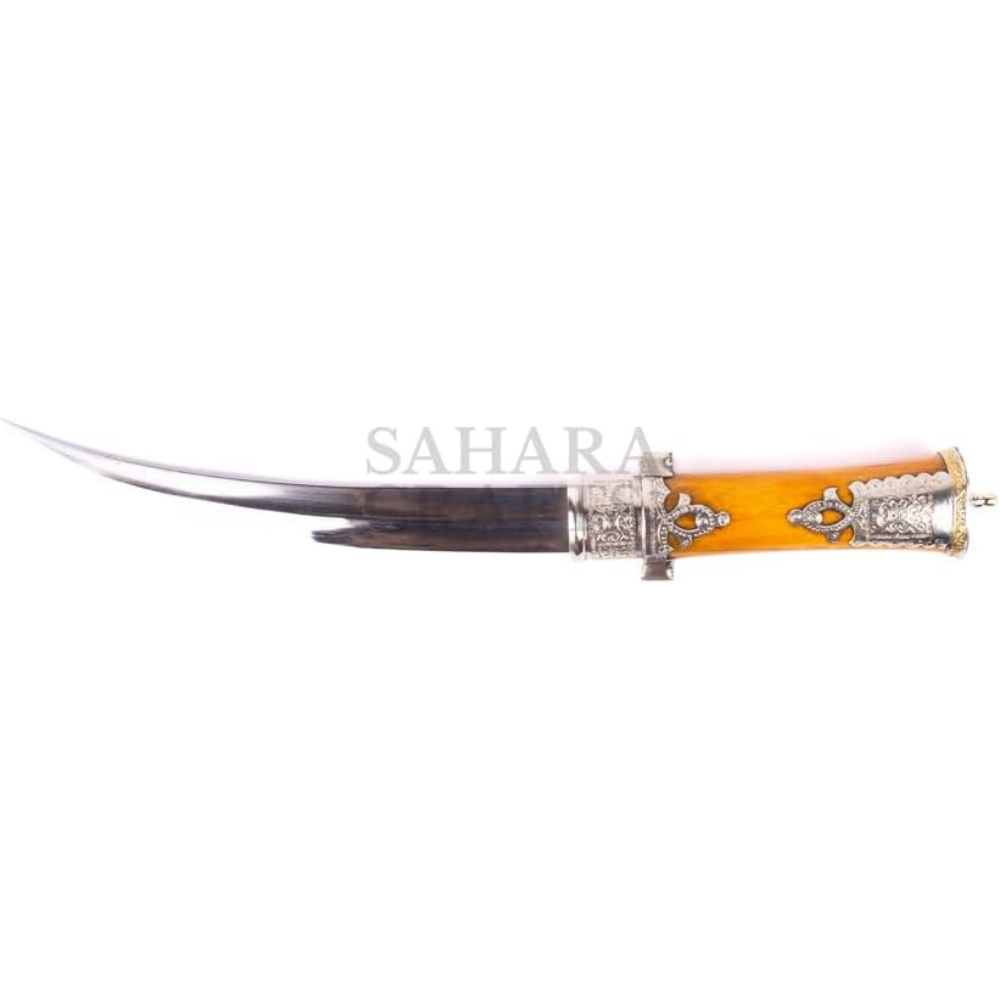
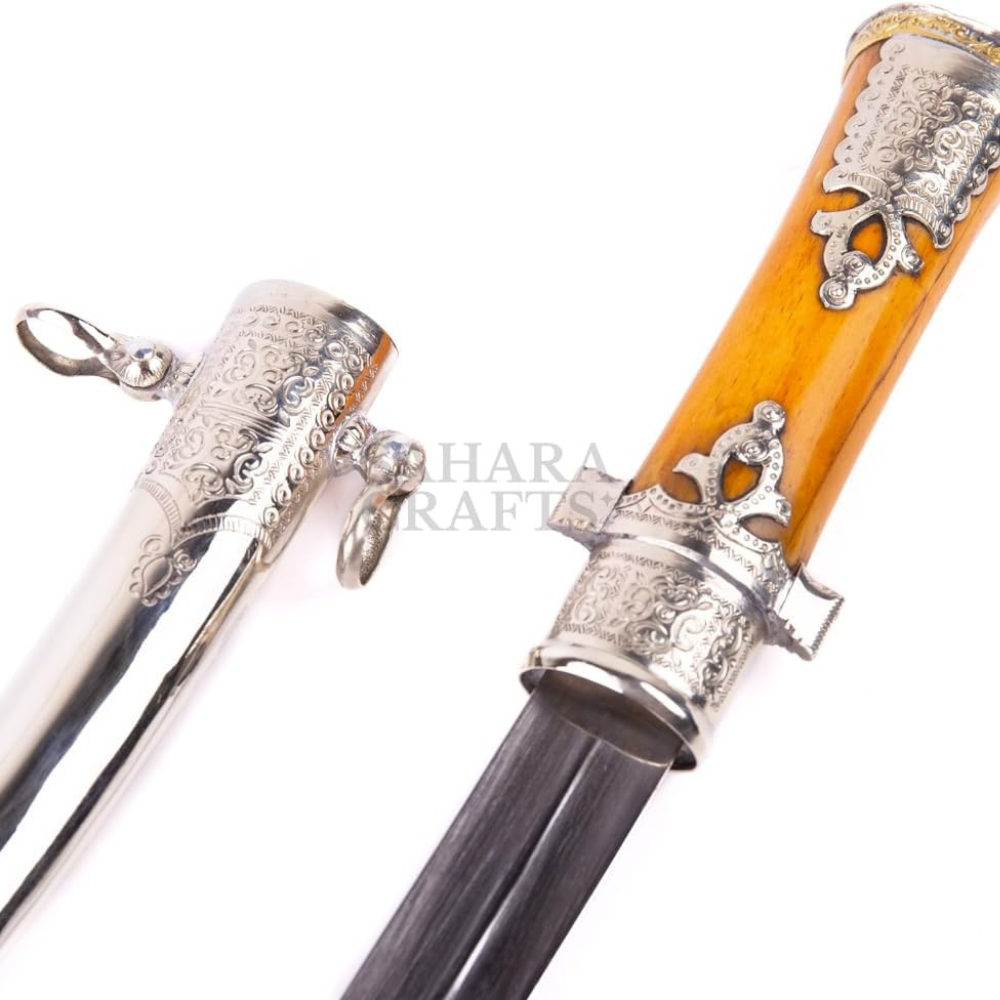
The blade is stainless steel, which gives the dagger a strong and realistic presence. The other parts are made from bone, which adds an authentic traditional touch. Bone handles have a natural texture and slight color variation that plastic cannot copy. This is one of the main reasons this dagger works well as ethnic decor.
The orange handle color also adds personality. It creates contrast with the silver blade and makes the dagger stand out in a display setting. Because it is handmade, small imperfections are expected, and this actually supports the authenticity of the piece.
Key points
- Moroccan Koumya / Jambiya inspired design
- Handmade ethnic Berber decorative dagger
- Stainless steel blade with bone handle parts
- Orange handle adds strong visual contrast
- Built for cultural decor and collecting
How strong is the stainless steel blade, and what does the thickness mean?
The dagger blade is made from stainless steel, which makes it more resistant to moisture compared to many traditional steels. This matters for decorative weapons because they often sit in rooms for long periods. Stainless steel reduces the risk of heavy corrosion, especially when stored correctly.
The blade length is 23 cm (9.05 inches), which gives the dagger a serious presence. It does not feel small or toy-like. The spine thickness is 3 mm (0.11 inches), which is a strong thickness for a decorative dagger. A thicker spine usually means better rigidity, less bending risk, and a more solid weight in the hand.
Even with stainless steel, light rust can appear. Handmade metal items sometimes develop surface oxidation depending on storage and humidity. This is common for artisan blades. A simple wipe with oil usually helps maintain the steel finish.
This dagger is best viewed as a functional-style collectible. It feels like a real blade, but it is mainly purchased for decor and cultural value.
Key points
- Stainless steel blade supports long-term durability
- Blade length: 23 cm / 9.05 inches
- Spine thickness: 3 mm adds rigidity and weight
- Light rust may appear due to handmade finishing
- Strong visual impact compared to small souvenir daggers
Why does the orange bone handle matter for Moroccan ethnic style?
The handle is one of the most visually important parts of a Moroccan dagger. This piece features an orange-toned handle, giving it a bold Berber-inspired look. In Moroccan decor, warm colors like orange often represent energy, tradition, and artisan identity. This makes the dagger a strong accent piece in ethnic home decoration.
The handle components are made from bone, which adds authenticity. Bone is not perfectly uniform, so it naturally shows small lines, texture patterns, and slight shade differences. That natural look makes the dagger feel less like a modern replica and more like a traditional handmade artifact.
The hilt length is 16 cm (6.29 inches), which gives it a comfortable grip and proper proportion. A longer hilt also improves the decorative balance between blade and handle, which is important for wall display. The orange finish also creates contrast against the silver blade, making the dagger stand out in cabinets, shelves, or Moroccan-themed rooms.
Key points
- Orange handle creates strong ethnic Moroccan styling
- Bone material adds traditional authenticity
- Natural bone texture makes each piece slightly unique
- Hilt length: 16 cm / 6.29 inches
- Great contrast between silver blade and warm handle tone
How does the scabbard improve the display and storage value?
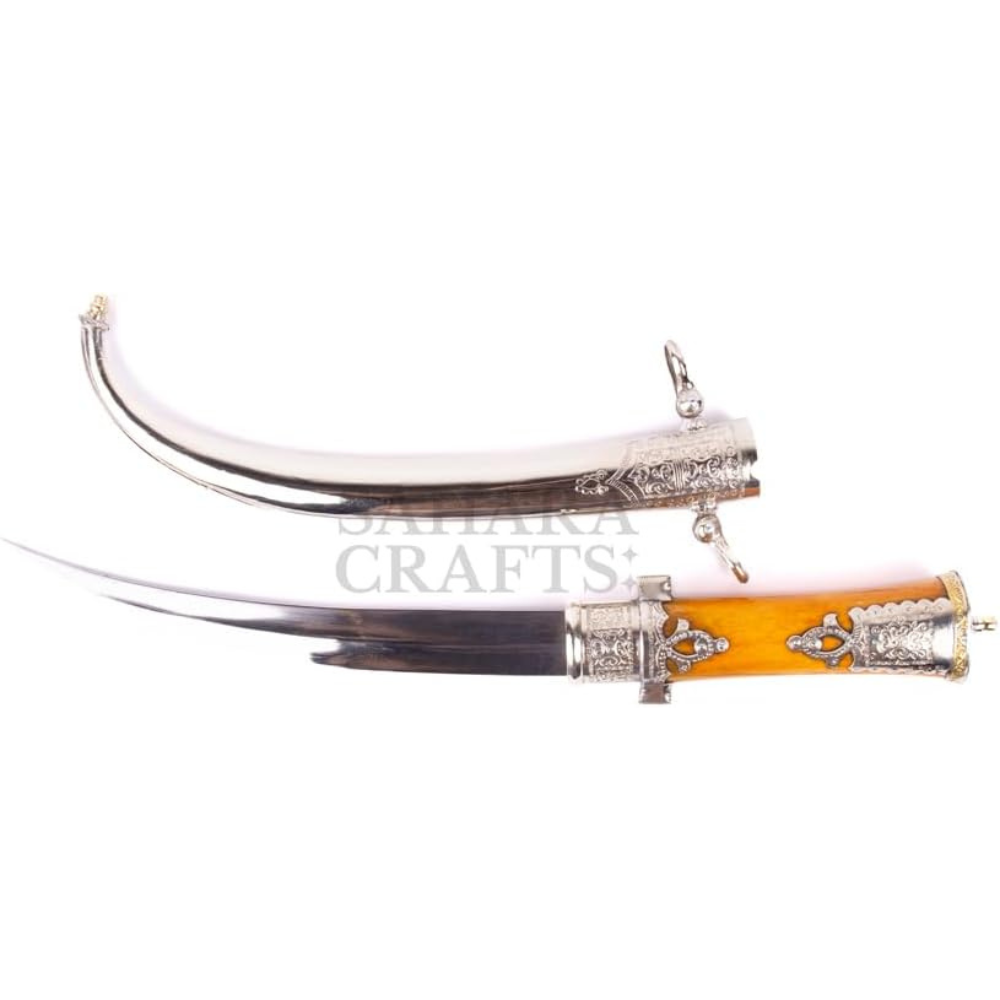
A Moroccan dagger is not complete without its scabbard. This dagger includes a scabbard with a length of 27 cm (10.62 inches), which improves both appearance and practicality. For collectors and decor buyers, the scabbard is not just a cover. It is part of the identity of the Koumya dagger style.
The scabbard gives the dagger a finished silhouette when displayed. It also makes the dagger safer to store. Even if the blade is not used, the sharp edge and exposed metal can cause scratches or accidents. A scabbard prevents that and keeps the blade protected from dust, fingerprints, and moisture exposure.
The scabbard also improves the dagger’s decorative value. It makes it look like a ceremonial weapon rather than a loose knife. This is important for ethnic decor because the full presentation creates a stronger cultural impact. It also makes the dagger more suitable as a gift, since it looks complete and well-prepared.
Key points
- Scabbard length: 27 cm / 10.62 inches
- Adds authenticity to the Koumya dagger style
- Protects blade from dust, moisture, and fingerprints
- Improves safety for storage and display
- Creates a complete decorative silhouette
What do the dimensions tell about the real size and presence of the dagger?
This dagger is considered a large decorative piece, and the measurements confirm that. The total length is 42 cm (16.53 inches), which gives it a strong presence without being oversized. It fits well on walls, in display cabinets, or on shelves, and it stands out more than smaller souvenir knives.
The blade length is 23 cm, which creates a realistic dagger proportion. It looks like a real cultural weapon rather than a short decorative ornament. The handle length of 16 cm gives the dagger good balance, which matters both visually and physically. A balanced dagger looks more authentic and feels more stable when held.
The spine thickness of 3 mm also supports the idea that this is not a thin replica. Many decorative daggers use very thin steel, which bends easily. This one has enough thickness to feel solid. The scabbard length of 27 cm also matches the blade size properly, giving a correct traditional shape.
For decor buyers, these dimensions make it easier to plan placement in a home.
Key points
- Total length: 42 cm / 16.53 inches
- Large size suitable for display walls and cabinets
- Blade length: 23 cm / 9.05 inches
- Hilt length: 16 cm / 6.29 inches
- Strong proportions for a traditional Moroccan Koumya dagger
How does this Koumya dagger connect to Moroccan and Arabic history?
The Koumya (often linked to the Jambiya dagger family) holds deep cultural meaning in Morocco and North Africa. It has been used historically as both a weapon and a symbol. In many Arabic and Berber traditions, daggers represented social status, personal honor, and family heritage. People wore them not only for protection, but also as a sign of identity.
This dagger reflects that tradition through its shape and decorative style. The handle design includes traditional Arabic motifs, which are often inspired by geometric patterns and heritage craftsmanship. This adds historical character, especially for collectors who value cultural meaning more than modern knife performance.
Owning a decorative Moroccan dagger like this often feels like owning a piece of North African history. It fits well in Islamic decor collections, Arabic heritage displays, and ethnic Berber art settings. It also works as a conversation piece because the Koumya style is instantly recognizable to people familiar with Moroccan craftsmanship.
This historical background is one of the strongest reasons people collect Moroccan daggers.
Key points
- Koumya dagger style is strongly tied to Moroccan heritage
- Symbol of honor, prestige, and cultural identity
- Arabic motifs support traditional decorative value
- Fits Islamic and Berber themed collections
- More than decor, it represents cultural history
Is this dagger functional, or is it mainly made for decoration?
This dagger is built with a real stainless steel blade, so it is not a toy. It has the weight and thickness of a real dagger, and it can technically function as a blade. However, its main purpose remains decorative and collectible. The design focuses on cultural appearance, historical symbolism, and artisan styling rather than modern cutting performance.
A traditional Koumya or Jambiya dagger is usually curved and shaped for heritage style, not for practical everyday use. That means it may not be sharpened like a factory knife. It may also have slight irregular finishing because it is handmade. This is normal, and it does not reduce the decorative value.
For collectors, the benefit is that it feels authentic. Many decorative daggers look fake because they use thin metal and cheap handles. This one uses stainless steel and bone, which gives it real material quality. For buyers looking for an ethnic Moroccan knife decor piece, this is the type of dagger that feels serious and culturally accurate.
Key points
- Real stainless steel blade construction
- Built as a decorative and cultural dagger
- May not be factory-sharpened
- Traditional curved shape supports authenticity
- Strong collectible value for Moroccan dagger enthusiasts
What imperfections should be expected from a handmade Moroccan dagger?
This dagger is handmade, so it will not look perfectly identical to factory products. Small imperfections may appear on the blade surface, the handle, or the scabbard finish. These imperfections can include polishing marks, slight uneven engraving, small scratches, or minor discoloration. For handmade Moroccan craft items, these details are common and expected.
The blade may also show light rust. Even stainless steel can develop surface rust depending on humidity exposure, shipping conditions, or long-term storage. This does not automatically mean the blade is damaged. Many collectors consider it normal for handmade decorative weapons, especially those made with traditional methods.
The bone parts can also show natural variation. Bone is a natural material, so it may contain small lines or uneven color areas. This gives the dagger a more authentic handmade identity. Also, the orange tone may appear slightly different depending on lighting and screen settings. Any visible details shown in product photos are considered part of the described condition.
Key points
- Handmade imperfections are normal and expected
- Light rust may appear on the stainless steel blade
- Bone texture varies naturally from piece to piece
- Color differences may happen due to lighting
- Minor marks add authenticity rather than looking factory-made
How should this decorative dagger be cleaned and maintained safely?
This dagger requires simple care, but regular maintenance helps preserve its appearance. The blade should be wiped with a dry cloth after handling, since fingerprints can leave moisture and oils. Over time, this can cause spotting or light oxidation. A soft cloth is enough for most cleaning.
If rust spots appear, they can usually be cleaned with gentle metal polish or fine cleaning material, followed by wiping the blade dry. Many collectors apply a thin layer of oil to protect the blade surface. This helps reduce oxidation, especially if the dagger stays inside the scabbard for long periods.
For the bone handle, avoid soaking it in water. Bone is strong but can absorb moisture. A slightly damp cloth works better, followed by immediate drying. Avoid harsh chemicals because they can damage natural materials.
The best storage method is a dry environment away from bathrooms or humid windows. Since the care instruction mentions hand wash only, cleaning should stay gentle and controlled.
Key points
- Wipe blade after handling to avoid fingerprints and spots
- Use light oil for long-term blade protection
- Remove rust gently with mild metal polish if needed
- Clean bone handle carefully with minimal moisture
- Store in a dry place to reduce oxidation risk
Who is this Moroccan ethnic dagger best suited for as a collectible or gift?
This Moroccan decorative dagger is best suited for collectors who enjoy cultural weapons, Berber ethnic decor, Islamic heritage items, and handmade Moroccan craftsmanship. The large size and strong silhouette make it a serious display piece rather than a small souvenir. It works well for people who decorate with Moroccan items like lanterns, rugs, brass trays, pottery, or Arabic wall art.
It also fits collectors of knives and daggers who appreciate unique handle materials like bone and traditional motifs. The orange handle adds a bold look, which makes it ideal for display shelves or themed rooms. It can also work as a gift for someone interested in Moroccan history or Arabic cultural design, especially because it comes with a scabbard for complete presentation.
This dagger may not suit buyers who want factory-perfect polish or flawless finishing. Handmade Moroccan craft usually includes small marks and variation. For buyers who want authentic character and traditional style, that variation is part of the value.
Key points
- Best for Moroccan decor and Berber ethnic collections
- Suitable for collectors of Arabic daggers and cultural weapons
- Orange handle makes it visually striking
- Comes with scabbard for complete display
- Handmade character means natural imperfections may appear
Reviews
There are no reviews yet.