

What Is a Moroccan Koumya Dagger and Why Is It Considered a Traditional Artifact?

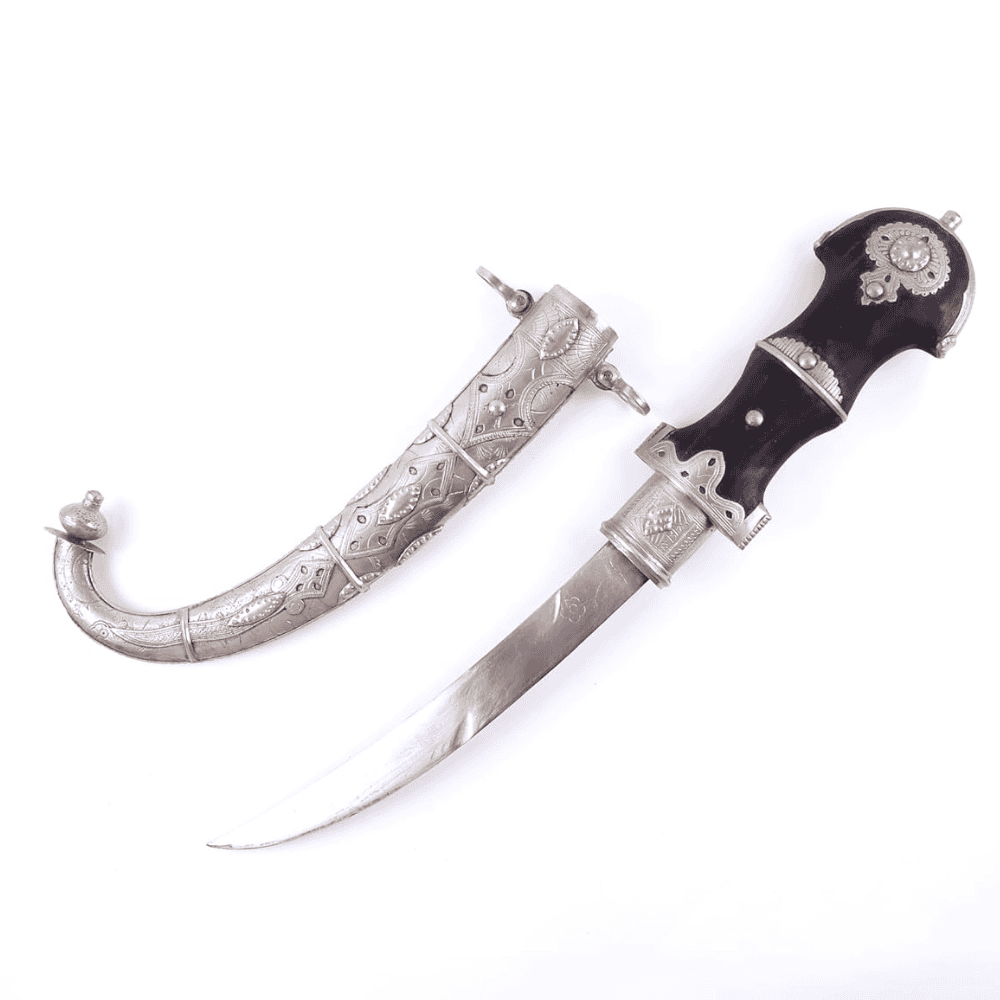
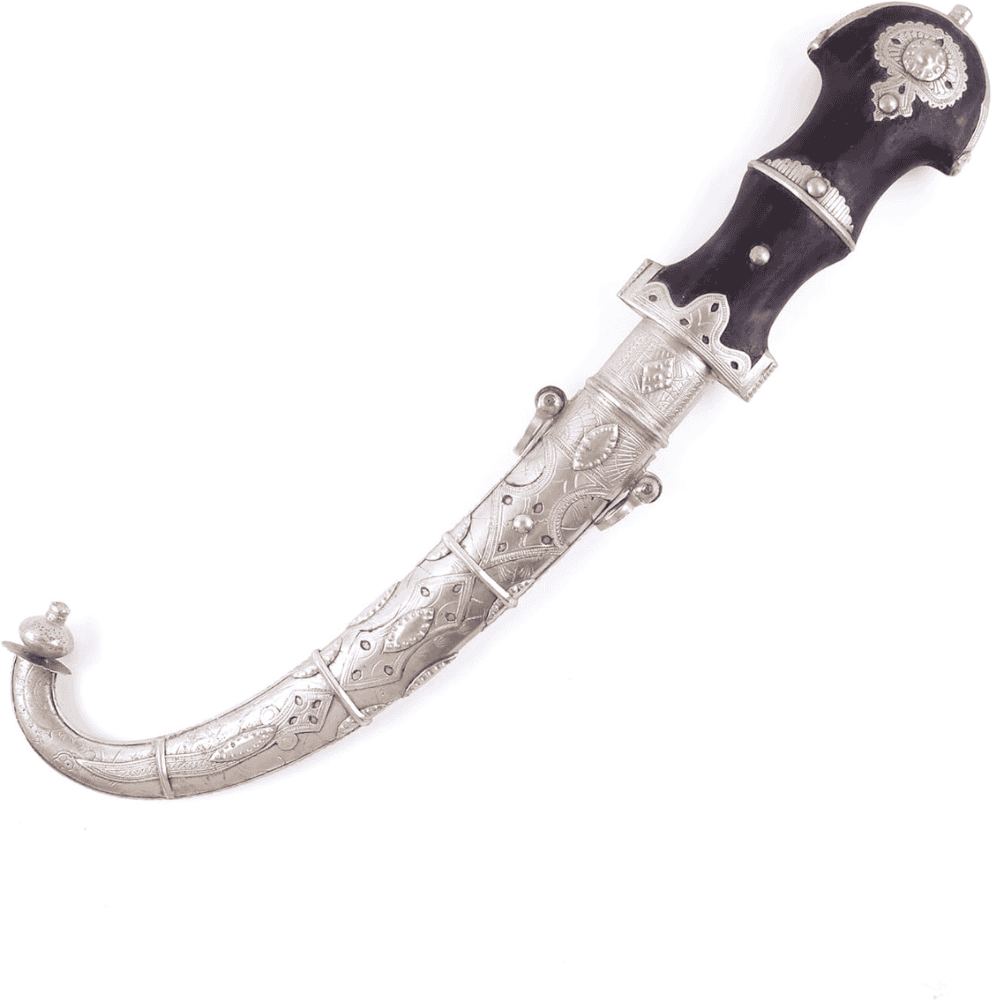
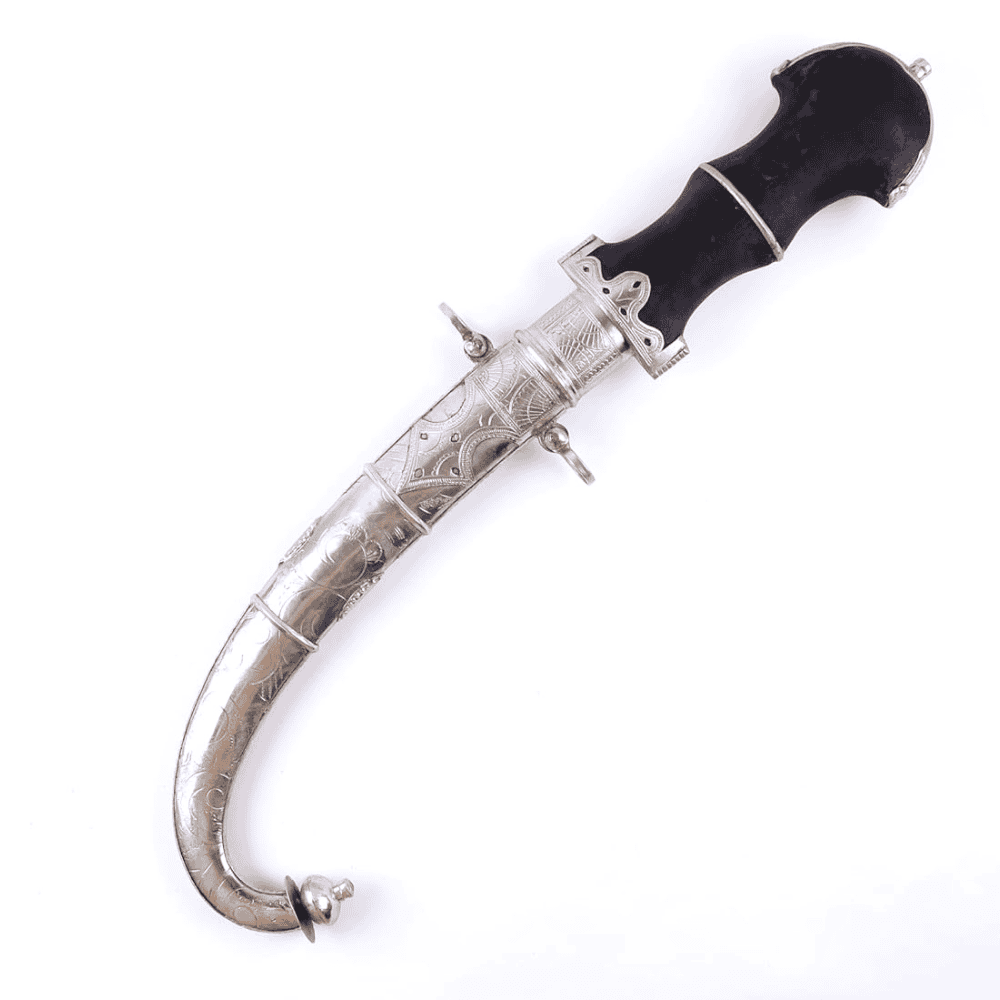
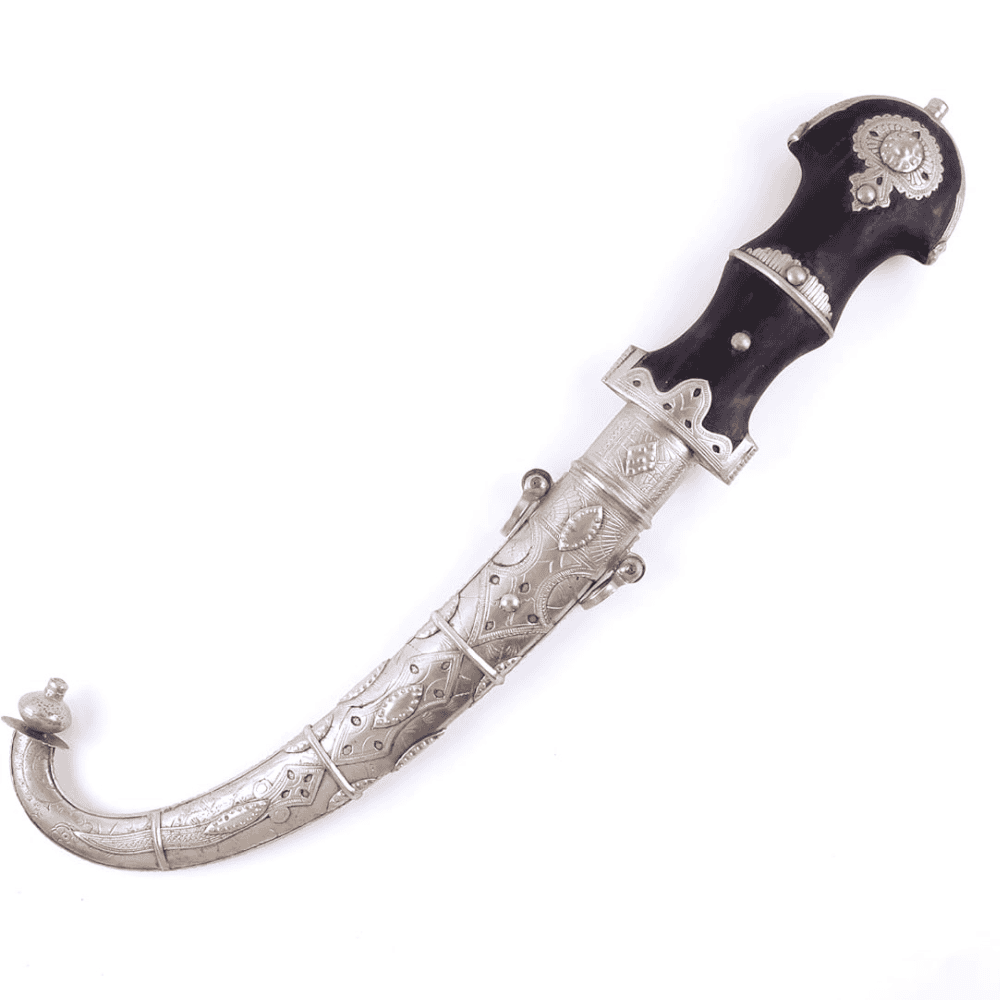
The Moroccan Koumya dagger is a traditional curved dagger deeply connected to North African and Islamic cultural heritage. This vintage style Moroccan Jambiya dagger reflects a historical weapon design that has been present for centuries in ceremonial clothing and decorative collections. The curved blade profile and the distinctive hilt shape represent recognizable characteristics of traditional Moroccan daggers. These objects are often valued today as cultural artifacts rather than practical cutting tools.
This handmade Moroccan Koumya dagger features a stainless steel blade combined with wooden elements in the handle and structural parts. Stainless steel provides resistance to corrosion compared with traditional carbon steel blades, helping the blade maintain structural stability over time. Wooden components reinforce the authentic handmade appearance and preserve the traditional aesthetic commonly associated with Islamic decorative daggers.
The piece functions mainly as a decorative dagger intended for collectors interested in Middle Eastern and North African heritage items. Its form reflects the classic Koumya dagger silhouette that includes a curved blade and a fitted scabbard. Because it is handmade, each dagger may present small natural variations that contribute to a unique visual character.
This style of Arabic dagger is commonly placed in cultural collections, historical themed interiors, or traditional weapon displays. Its vintage appearance reflects the visual identity of traditional Moroccan craftsmanship.
Key Points
- Traditional Moroccan Koumya dagger design
- Inspired by historic Islamic and North African weapons
- Stainless steel blade with wooden handle components
- Handmade construction with natural variations
- Suitable for decorative collections and cultural displays
How Does the Handmade Craftsmanship Influence the Authentic Appearance?
Handmade craftsmanship plays an important role in shaping the appearance and identity of this Moroccan Jambiya dagger. Unlike factory produced decorative knives, this dagger is created using traditional manual techniques. The process involves shaping the blade, assembling the wooden handle, and fitting the scabbard carefully. Each step influences the final appearance and character of the piece.
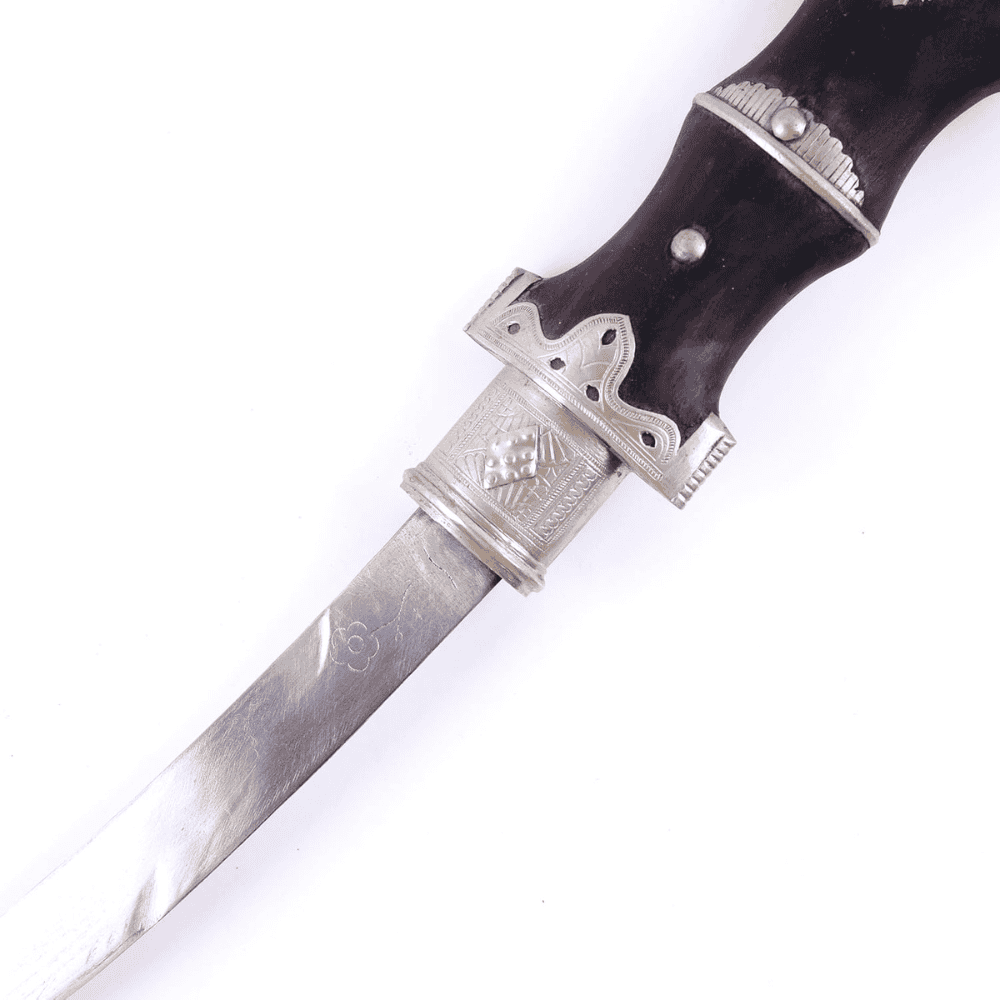
Manual crafting often results in small irregularities. These variations are normal for handmade Moroccan artifacts and indicate that the item was not produced by automated machinery. Slight marks on the blade surface, subtle differences in wood texture, and minor finishing variations are commonly observed in handmade decorative daggers.
Since artisans work with natural materials and manual tools, each Koumya dagger appears slightly different from another. This uniqueness often attracts collectors who value traditional craftsmanship. Handmade items reflect the artisan’s personal technique rather than the uniform consistency of industrial production.
Another common characteristic of handcrafted metalwork is the presence of light surface oxidation on the stainless steel blade. These may appear as small rust marks. They do not necessarily indicate structural problems and are often seen on handcrafted metal pieces during storage or transport.
The handmade process reinforces the visual authenticity of the dagger and connects it to the long tradition of Moroccan decorative weapon craftsmanship.
Key Points
- Crafted using traditional manual techniques
- Handmade irregularities are normal and expected
- Unique appearance in every individual piece
- Natural material variations enhance authenticity
- Minor oxidation marks may appear on the blade
What Materials Are Used in the Construction of the Dagger?
The construction of this Moroccan Koumya dagger combines durable metal with natural decorative materials. The blade is made from stainless steel, a material frequently used in decorative knives because it offers corrosion resistance and structural stability. Stainless steel blades also require less maintenance compared with some traditional blade metals.
The blade thickness measures approximately two millimeters. This thickness is typical for decorative daggers that are designed mainly for display rather than heavy practical use. The structure remains rigid while still maintaining a manageable weight for handling or repositioning in display arrangements.
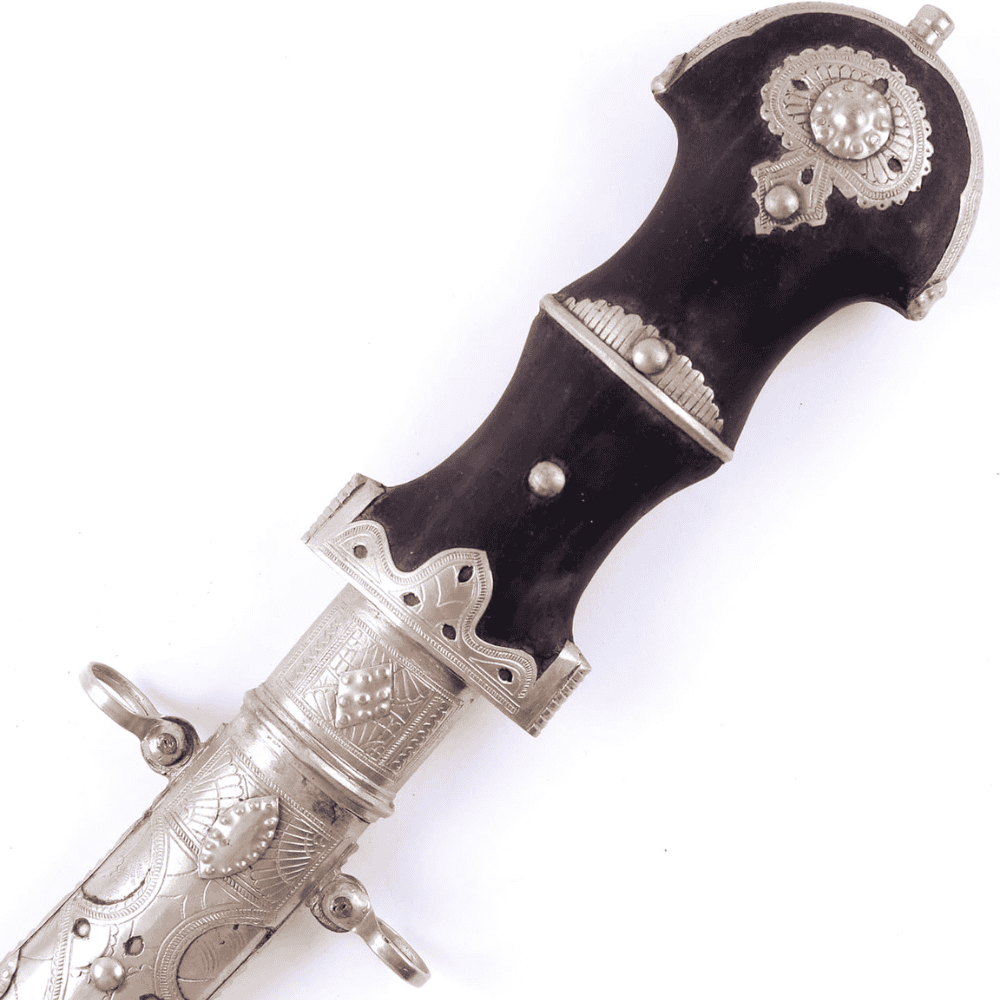
The handle and several structural components are made from wood. Wood has historically been used in Moroccan dagger handles because it provides both functional grip and visual warmth. Artisans can easily carve wood into curved shapes that complement the design of traditional daggers.
The scabbard also includes wooden components. The scabbard acts as a protective sheath for the blade and plays a major role in the visual presentation of the dagger. Natural wood tones contribute to the vintage decorative style typically associated with Moroccan Islamic daggers.
The combination of stainless steel and wood produces a balanced design that merges durability with traditional aesthetic character.
Key Points
- Stainless steel blade construction
- Blade thickness approximately two millimeters
- Wooden handle and structural components
- Wood scabbard elements
- Combination of durability and traditional aesthetics
What Are the Dimensions of This Moroccan Jambiya Dagger?
Understanding the size of a decorative dagger helps determine how it fits within a collection or display environment. This Moroccan Koumya dagger follows proportions that resemble ceremonial daggers historically used across North African regions.
The full length of the dagger measures approximately fifty four centimeters. This measurement includes the blade and the handle combined. Such length allows the dagger to stand out visually in decorative arrangements while still remaining practical for shelf or wall displays.
The curved blade length measures approximately thirty centimeters. The curvature contributes to the recognizable Koumya silhouette that distinguishes this style from straight blade knives. The shape follows traditional Moroccan dagger designs.
The handle measures about twenty six centimeters in length. The longer wooden hilt visually balances the curved blade and strengthens the classic decorative profile of the dagger.
The scabbard measures approximately fifty one centimeters in length. It allows the blade to remain fully enclosed when not displayed unsheathed and contributes to the complete decorative presentation.
Key Points
- Total length approximately fifty four centimeters
- Blade length approximately thirty centimeters
- Handle length approximately twenty six centimeters
- Scabbard length approximately fifty one centimeters
- Blade spine thickness approximately two millimeters
How Does the Curved Blade Design Reflect Traditional Arabic Dagger Styles?
The curved blade is one of the most recognizable characteristics of the Moroccan Koumya or Jambiya dagger. This curved profile reflects historic Arabic dagger designs that have appeared in different parts of North Africa and the Middle East.
In historical craftsmanship, the curved blade often served both practical and symbolic purposes. In decorative versions, the curve mainly contributes to the visual identity of the dagger. The curved silhouette helps the dagger stand out from straight blade knives and reflects its traditional heritage.
The stainless steel blade in this dagger follows the classic curve from the base toward the tip. This shape produces a distinct outline that becomes immediately recognizable when the dagger is placed in a scabbard or mounted on a display surface.
The transition between the blade and the handle also reflects the traditional form. The handle shape complements the curve, creating a continuous visual flow from the hilt through the blade.
Collectors interested in Islamic decorative weapons or traditional Moroccan craftsmanship often recognize this curved blade style as a defining feature.
Key Points
- Traditional curved Koumya blade profile
- Inspired by historic Arabic dagger styles
- Stainless steel blade preserves the classic shape
- Visual balance between blade and handle
- Distinct decorative silhouette
What Role Does the Wooden Handle Play in the Overall Design?
The wooden handle contributes both structural support and visual identity to the Moroccan dagger. Historically, many Koumya daggers used wood or horn handles because these materials were easier to carve and comfortable to hold.
In this dagger, the wooden hilt reinforces the traditional appearance commonly associated with handmade Moroccan weapons. Wood introduces natural warmth that contrasts with the metal blade and helps the dagger blend naturally with traditional interior decor.
The handle length also helps balance the visual proportions of the dagger. A longer handle complements the curved blade and creates a symmetrical appearance when the dagger is displayed.
Wood also allows small texture differences that enhance the uniqueness of each piece. Grain patterns, color tones, and subtle carving marks may appear across different handles. These variations typically indicate manual shaping rather than automated manufacturing.
The wooden handle therefore contributes both functional structure and authentic aesthetic character.
Key Points
- Wooden hilt reinforces traditional Moroccan style
- Natural grain creates unique visual patterns
- Longer handle balances curved blade
- Wood historically used in dagger craftsmanship
- Enhances decorative authenticity
Why Do Handmade Daggers Often Show Small Imperfections?
Handmade decorative items frequently include small imperfections because they are produced through manual craftsmanship rather than automated industrial methods. This Moroccan Koumya dagger follows traditional hand assembly techniques, which naturally introduce slight differences between individual pieces.
The stainless steel blade may show subtle polishing marks or light surface spots created during shaping and finishing. Minor rust marks may also appear after storage or transport. These details are common in handcrafted metal objects.
Wooden elements can also display natural variations. Grain patterns may differ, and tiny irregularities may appear in carving or finishing. These characteristics are often considered part of the natural identity of handmade items.
Because the dagger is not factory produced, it does not follow the uniform precision of mass manufactured knives. Instead, each item reflects the individual work of the artisan.
Collectors who appreciate handmade Moroccan objects often value these details because they confirm that the item was crafted manually.
Key Points
- Handmade process creates natural variations
- Blade marks or light oxidation may appear
- Wood grain patterns vary from piece to piece
- Imperfections indicate manual craftsmanship
- Each dagger maintains unique visual character
How Does the Scabbard Complement the Decorative Presentation?
The scabbard forms an important part of the visual and functional design of the Moroccan Jambiya dagger. Its main role is to protect the blade while also contributing to the decorative appearance of the complete dagger set.
The scabbard length allows the curved blade to be fully enclosed when the dagger is not displayed unsheathed. This design protects the blade surface and keeps the dagger safe when placed in storage or moved between displays.
The shape of the scabbard typically follows the curve of the blade. This alignment creates a continuous flowing outline when the dagger remains sheathed. Such visual harmony is a recognizable feature of traditional Arabic dagger sets.
Wood elements within the scabbard complement the wooden handle. Matching tones between these components produce a cohesive appearance across the entire dagger.
In display settings, the scabbard becomes part of the decorative presentation rather than only a protective sheath.
Key Points
- Protective sheath for the blade
- Scabbard designed to follow blade curvature
- Wood elements match the handle
- Enhances decorative appearance
- Part of the traditional dagger presentation
Where Can This Decorative Moroccan Dagger Be Displayed?
A decorative Moroccan Koumya dagger often appears in cultural collections or interiors inspired by traditional craftsmanship. Because of its size and historical design, the dagger can function as a central visual object within decorative arrangements.
Collectors frequently place similar daggers on wall mounts, display shelves, or inside glass cabinets. The curved blade shape and long scabbard create a recognizable silhouette that fits well within historical themed interiors.
The dagger can also accompany collections of antique weapon replicas, Islamic decorative art, or Moroccan handicrafts. Its handmade construction helps it blend naturally with other artisan made items.
Another approach includes placing the dagger near decorative plates, carved wooden objects, or traditional lanterns. Such arrangements help create a cohesive visual theme inspired by Moroccan cultural heritage.
The dagger is typically treated as a collectible decorative object rather than a functional cutting tool.
Key Points
- Suitable for cultural themed interiors
- Can be displayed on shelves or wall mounts
- Fits Moroccan and Islamic decor styles
- Complements traditional artifact collections
- Primarily a decorative collectible
What Should Buyers Know About Color Variations and Visual Differences?
Color variations frequently appear in handmade decorative items. This Moroccan dagger may show slight differences in tone compared with photographs because lighting conditions and display screens influence how materials appear.
The wooden handle may display darker or lighter tones depending on the natural wood grain and finishing process. Natural materials often produce subtle differences between pieces.
The stainless steel blade may also reflect light differently depending on the environment. Minor surface marks visible in photographs should be considered part of the described condition of the handmade item.
When viewing product images, any visible marks, textures, or irregularities are generally considered part of the natural appearance of the dagger rather than manufacturing defects.
Recognizing these variations helps establish realistic expectations when purchasing handmade decorative artifacts.
Key Points
- Color may vary due to lighting and screen display
- Natural wood grain produces unique tones
- Metal reflections may appear different in photos
- Visible imperfections reflect handmade nature
- Each dagger may show slight visual differences
Reviews
There are no reviews yet.