

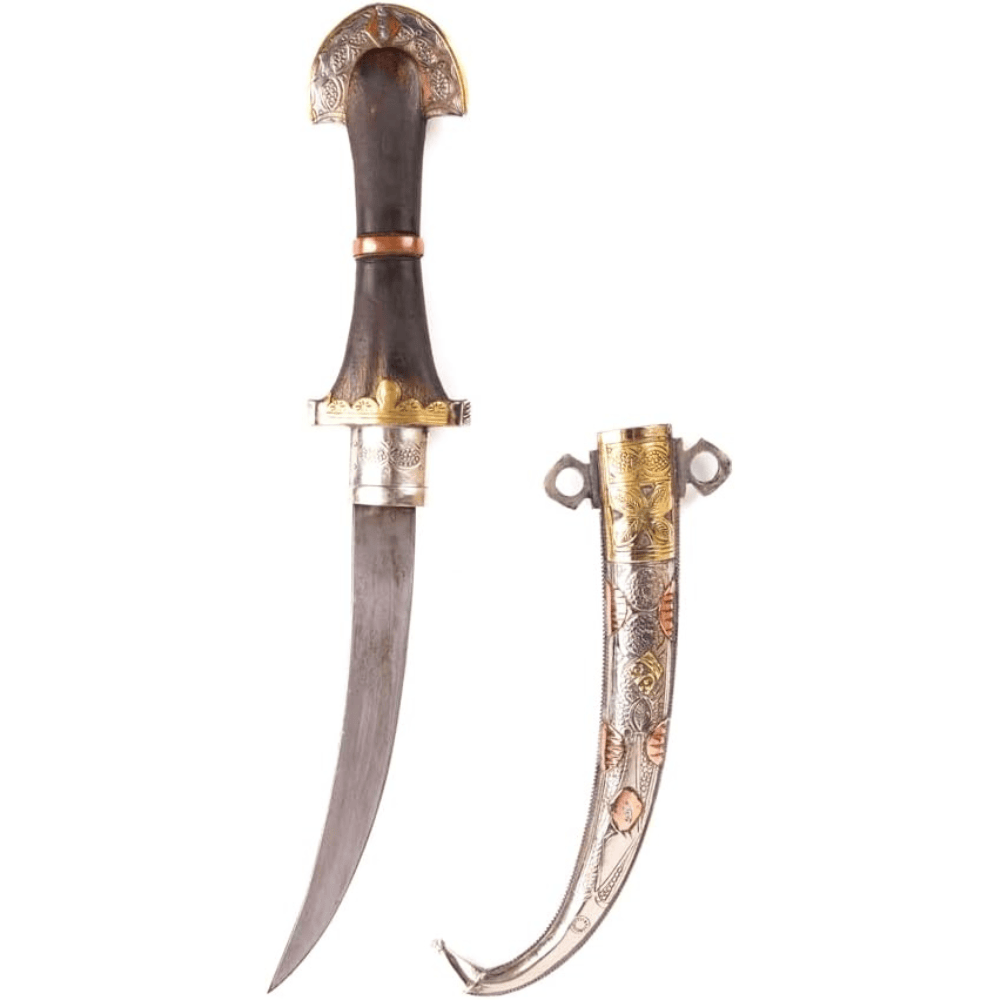
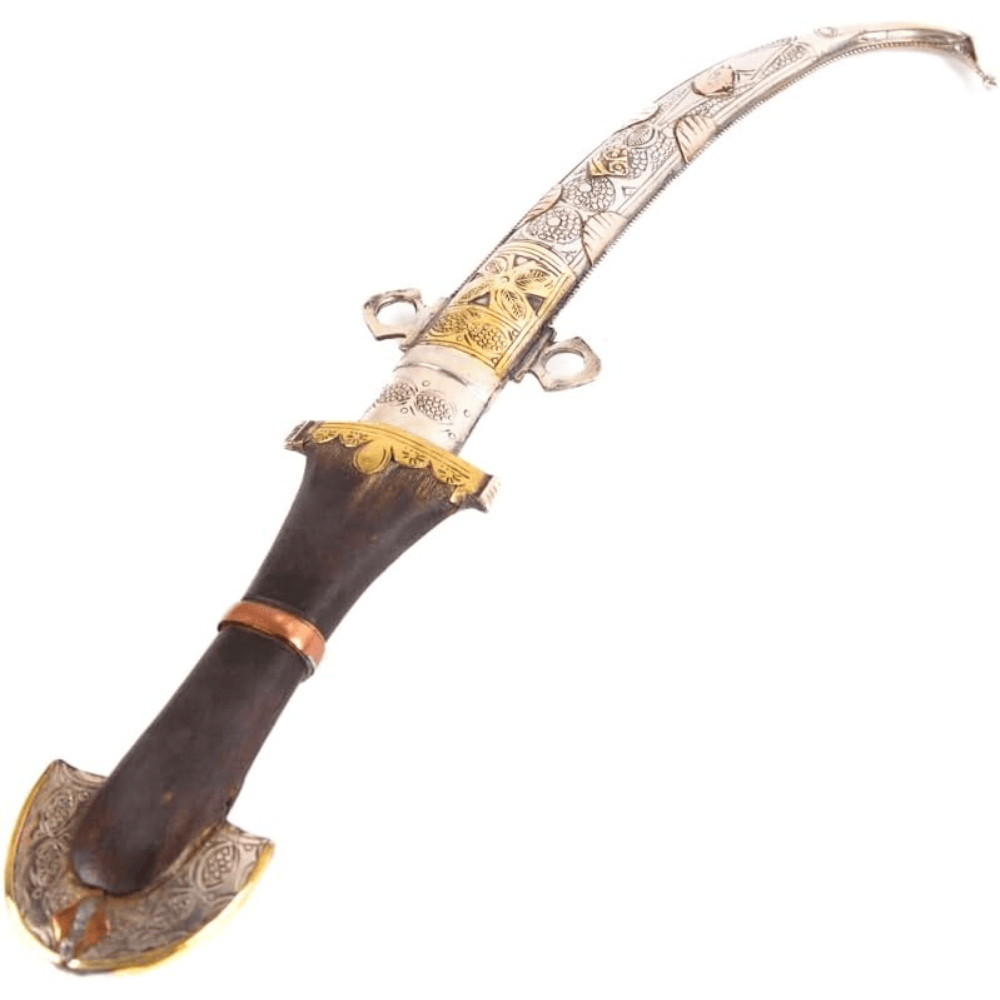
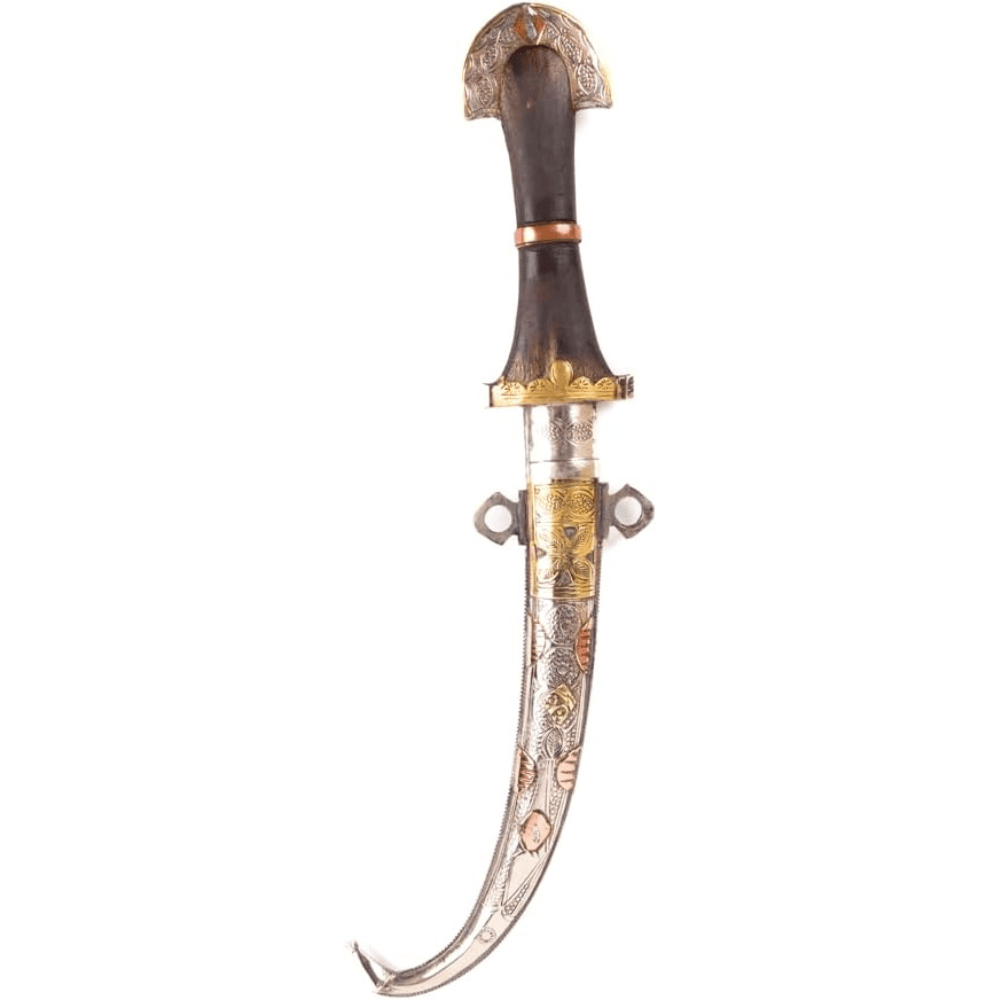
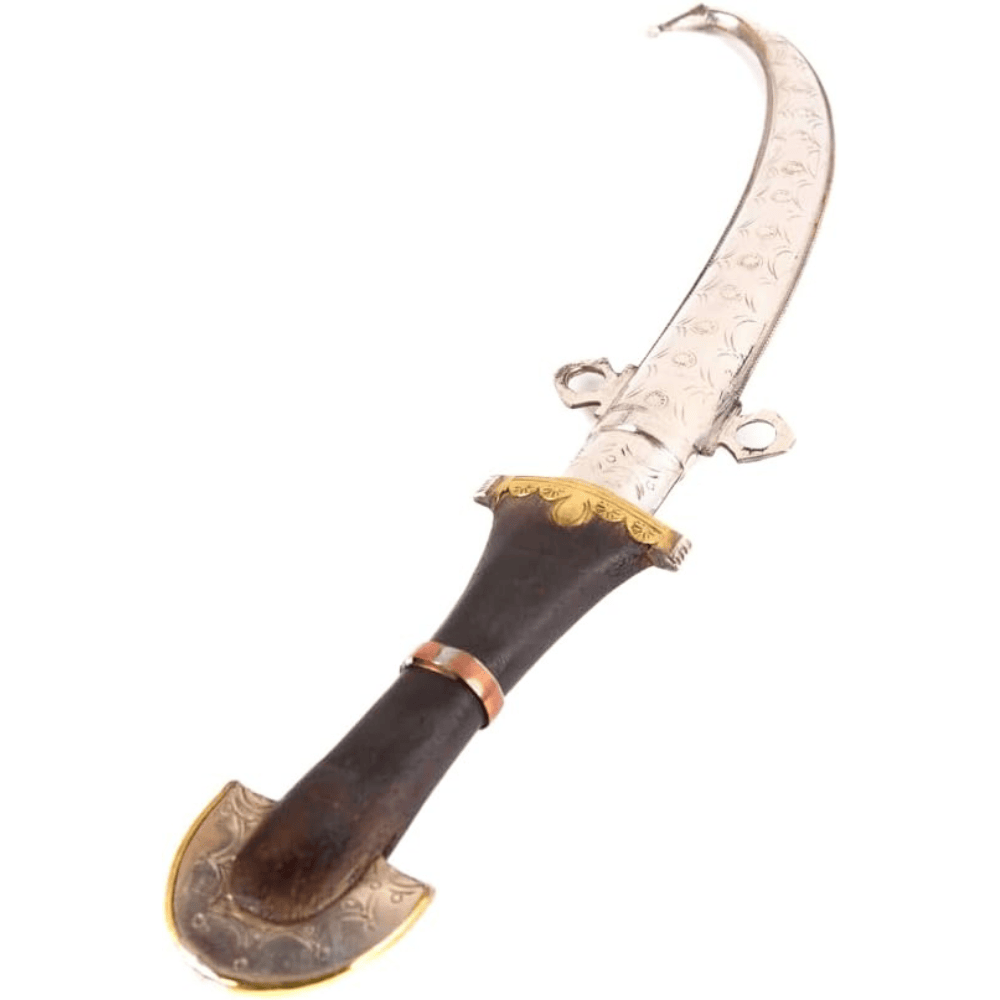
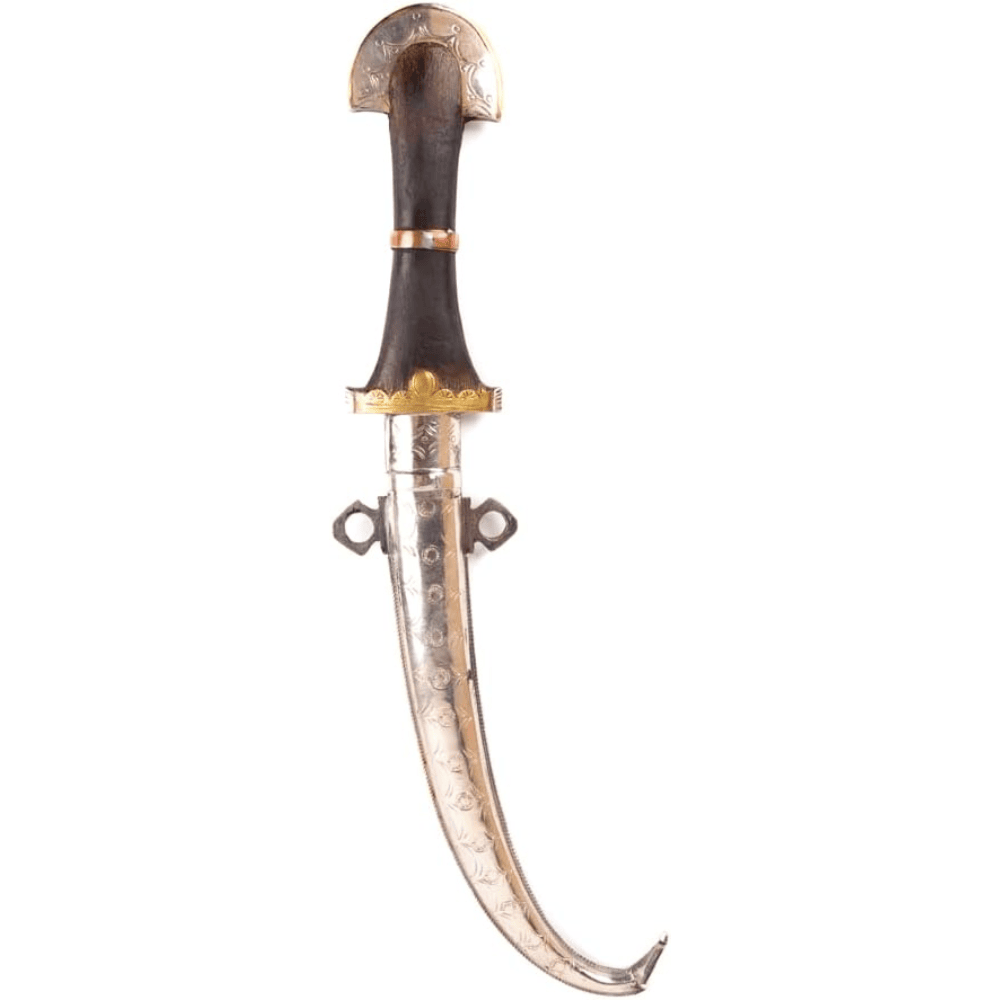
What kind of Moroccan dagger is this piece in real terms?

This piece is a handmade Moroccan-style dagger influenced by traditional Jambiya and Islamic ceremonial knives. It is not produced in a factory setting and does not aim to meet modern tactical or performance standards. Its value comes from cultural symbolism, manual craftsmanship, and visual impact. The dagger is created mainly as a decorative object that reflects North African and Arabic heritage rather than practical use. The stainless steel blade provides visual realism, while the wooden handle and sheath help keep the overall structure lightweight and suitable for display.
The form follows traditional proportions seen in Moroccan decorative daggers, with a curved profile and compact shape. Because it is handmade, the finish can be uneven and small surface marks may appear. These details are signs of manual shaping rather than mass production. Functionally, the blade exists for balance and authenticity. From a buyer’s point of view, the benefit is owning a culturally representative object that does not feel industrial or uniform.
Key points
- Handmade decorative Moroccan dagger
- Inspired by Jambiya and Arabic knife forms
- Made mainly for display and collection
- Visible manual craftsmanship
How is the blade constructed and what should be realistically expected?
The blade is made from stainless steel, offering basic resistance to corrosion compared to carbon steel. Since the dagger is handmade and not factory-polished, light rust or oxidation spots may be present. This does not indicate damage. These marks usually reflect storage conditions, humidity, and hand-finishing methods. The blade is relatively thin, which keeps the dagger visually balanced and lightweight.
The blade is not sharpened and should not be treated as a cutting tool. Its purpose is visual accuracy rather than performance. Surface scratches, uneven polish lines, or slight color changes are common. These traits are typical of handmade decorative blades. The benefit is authenticity, while the limitation is that visual perfection is not the objective.
Key points
- Stainless steel blade with handmade finish
- Possible light rust or surface marks
- Thin blade focused on balance
- Decorative rather than functional
What materials are used in the handle and how do they affect durability?
The handle is made of wood and shaped by hand. Wood has long been used in Moroccan decorative daggers because it is easy to work with, visually warm, and natural in appearance. Grain variations, small cracks, or tone differences may be visible. These are normal features of real wood. The handle is not coated with heavy industrial finishes, which helps preserve a traditional look.
From a practical standpoint, the wooden handle is suitable for display handling but not for repeated force or outdoor exposure. The benefit of wood is light weight and authenticity. The limitation is sensitivity to moisture and extreme temperatures. Keeping the dagger indoors helps maintain the handle’s condition over time.
Key points
- Natural wooden handle
- Hand-shaped and finished
- Lightweight and traditional look
- Best for indoor display
How accurate are the dimensions and what size should be expected?
The measurements indicate a compact decorative dagger rather than a large ceremonial sword. The total length is around twenty six centimeters, making it suitable for shelves, cabinets, or wall displays. The blade and hilt proportions are balanced for visual presentation rather than dramatic scale.
Some listings reference a larger size category, which often reflects style naming rather than actual dimensions. Handmade items can include listing inconsistencies. The benefit of this size is easy placement in most interior spaces. The limitation is that it does not create the visual impact of oversized ceremonial blades.
Key points
- Compact decorative dimensions
- Easy to place in most spaces
- Balanced proportions
- Minor size variation possible
What role does the scabbard play in the overall design?
The scabbard is crafted from wood and designed to visually complement the dagger. It holds the blade securely while reinforcing the traditional Moroccan silhouette. Like the handle, the scabbard may show uneven coloration or minor surface marks. These are expected traits of handmade wooden sheaths.
From a display perspective, the scabbard completes the visual presentation. A dagger displayed with its sheath appears culturally accurate and finished. It also helps protect the blade surface during storage. The scabbard is not reinforced for transport or frequent handling and should be treated as a decorative component.
Key points
- Wooden handmade scabbard
- Matches traditional design
- Protects blade during storage
- Natural fit variations
How do handmade imperfections affect value and appearance?
Handmade Moroccan items are known for irregular details. This dagger may show asymmetry, uneven polish, small dents, or light rust marks. These are not manufacturing defects. They result from manual shaping and finishing. Factory-made replicas focus on uniformity, while handmade pieces focus on individuality.
For buyers who value authenticity, these imperfections add character. Each dagger has a slightly different appearance. The benefit is uniqueness. The limitation is that buyers expecting flawless finishes may find the look too raw or traditional.
Key points
- Visible handmade traits
- Each piece is unique
- No factory-level consistency
- Strong artisanal identity
How does color variation affect what arrives versus photos?
Color variation is expected due to lighting conditions, camera settings, and screen differences. Wood tones may appear lighter or darker in person, and metal surfaces may reflect light differently. These variations are normal and not considered flaws.
Photos represent the actual condition of the item, but exact color matching is not guaranteed. When placed in a real environment, the dagger often appears warmer and more textured than it does in studio images.
Key points
- Natural color differences expected
- Lighting affects appearance
- Photos show real condition
- No exact color guarantee
Where does this dagger fit best in home or collection use?
This dagger works best as a decorative or cultural display piece. It fits well in Moroccan-themed interiors, Islamic art collections, or curated shelves with cultural artifacts. Its size allows flexible placement without dominating the space.
It is not intended for reenactment or physical use. Treating it as décor helps preserve its condition. The benefit is adding cultural atmosphere. The limitation is that it should not be used as equipment.
Key points
- Ideal for decorative display
- Suitable for cultural interiors
- Compact and versatile placement
- Not designed for physical use
How should the dagger be maintained over time?
Maintenance requirements are simple. Keep the dagger dry and away from humidity. If light rust appears on the blade, gently wiping it with a dry cloth is sufficient. Avoid water, chemicals, or abrasive cleaners.
Proper indoor storage helps preserve both the metal and wood. The benefit is long-term durability with minimal effort. The limitation is that exposure to moisture may increase surface aging.
Key points
- Store in dry conditions
- Wipe blade gently when needed
- Avoid water and chemicals
- Low maintenance overall
Who is this dagger realistically suitable for?
This dagger suits buyers interested in Moroccan culture, handmade décor, or Islamic decorative artifacts. It fits collectors, interior decorators, and gift buyers seeking symbolic objects rather than tools. It may not appeal to those looking for sharp blades or modern finishes.
Its value lies in cultural representation and handmade character. The benefit is visual meaning and authenticity. The limitation is its decorative purpose.
Key points
- Suitable for collectors and décor use
- Appeals to cultural interests
- Not intended as a tool
- Best appreciated as display art
Reviews
There are no reviews yet.