

How Does a Moroccan Tagine Pot Create Rich, Flavorful Meals?

The Verve CULTURE Moroccan Tagine Pot brings traditional Moroccan slow cooking into the home kitchen. Made from clay and shaped with a distinctive conical lid, this cooking vessel helps circulate steam during cooking. As moisture rises from the ingredients, it collects inside the lid and returns to the dish. This natural cycle helps maintain moisture and allows meat, vegetables, herbs, and spices to cook together gradually. The result can be tender ingredients and a sauce with a deeper, more developed flavor.
Traditional Moroccan recipes often combine savory ingredients with warm spices, fresh herbs, preserved lemons, olives, or dried fruit. A tagine provides a suitable cooking environment for these combinations because it supports gentle cooking rather than relying entirely on high heat. The clay body also helps distribute heat during suitable cooking methods. For home cooks interested in North African food, this pot offers a practical way to explore classic recipes and prepare slow-cooked meals with a traditional presentation.
- Traditional Moroccan clay cooking pot.
- Conical lid supports steam circulation.
- Suitable for slow-cooked meat and vegetable dishes.
What Makes the Conical Lid Useful for Slow Cooking?
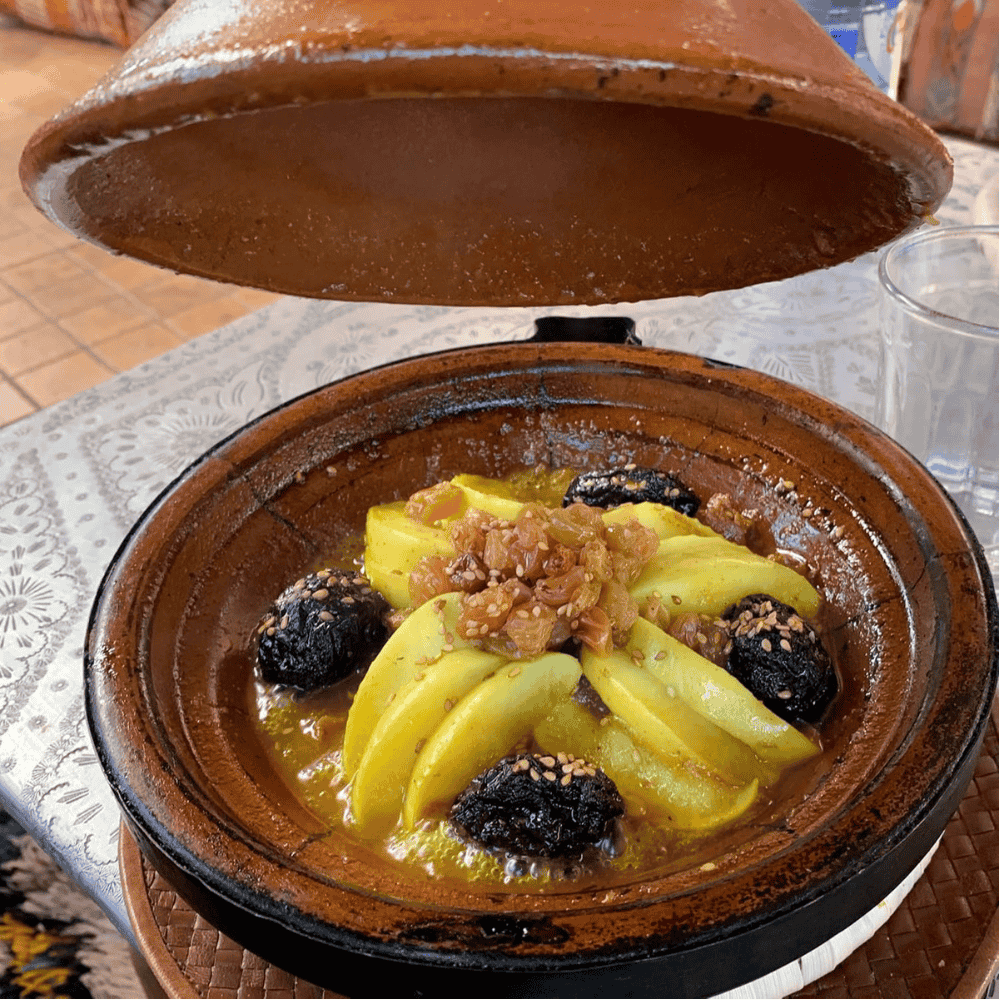
The conical lid is one of the most recognizable features of a Moroccan tagine. Its shape provides space for steam to rise, cool, and condense before returning to the ingredients. This process helps reduce moisture loss when the lid remains in place, although some evaporation can still occur. The cooking method works particularly well with recipes that benefit from gradual heat and a moist environment, including chicken with preserved lemon, lamb with prunes, and vegetable stews seasoned with cumin, ginger, paprika, or turmeric.
For best results, arrange the ingredients evenly and add an appropriate amount of liquid according to the recipe. Avoid filling the pot excessively because the ingredients need room to cook. Keep the lid closed during most of the cooking process and check the dish occasionally to prevent sticking. Cooking times depend on the ingredients, their size, and the heat source. A tagine is not a pressure cooker, so tough cuts of meat may require extended cooking. Gentle heat and patience help develop the texture and flavor associated with Moroccan home cooking.
- Conical lid helps return condensed moisture to the food.
- Useful for stews, braised meats, and vegetable dishes.
- Gentle cooking encourages flavors to develop gradually.
How Does Moroccan Clay Cookware Affect Food Preparation?
Clay cookware has a long history in Moroccan kitchens, where traditional cooking methods emphasize patience, balanced seasoning, and shared meals. The Verve CULTURE tagine uses clay associated with Morocco’s Wadi Lan region. Its natural material and handmade construction give it a different character from many metal cooking pots. Clay retains heat during use, which can help keep food warm when the vessel is handled and used correctly. The material also suits recipes prepared over controlled heat, allowing ingredients to cook together without requiring constant stirring.
Clay cookware needs appropriate handling because sudden temperature changes can cause damage. Follow the manufacturer’s instructions before the first use, particularly if the pot requires preparation or seasoning. Unless the product instructions explicitly confirm otherwise, do not assume that the tagine is suitable for every stovetop, direct flame, or oven setting. Avoid placing a hot pot on a cold or wet surface, and do not pour cold liquid into a very hot vessel. These precautions help protect the clay and glaze while supporting consistent cooking results.
- Made from Moroccan clay.
- Retains heat to help keep prepared dishes warm.
- Requires careful handling and gradual temperature changes.
Which Traditional Moroccan Recipes Can You Prepare in a Tagine?
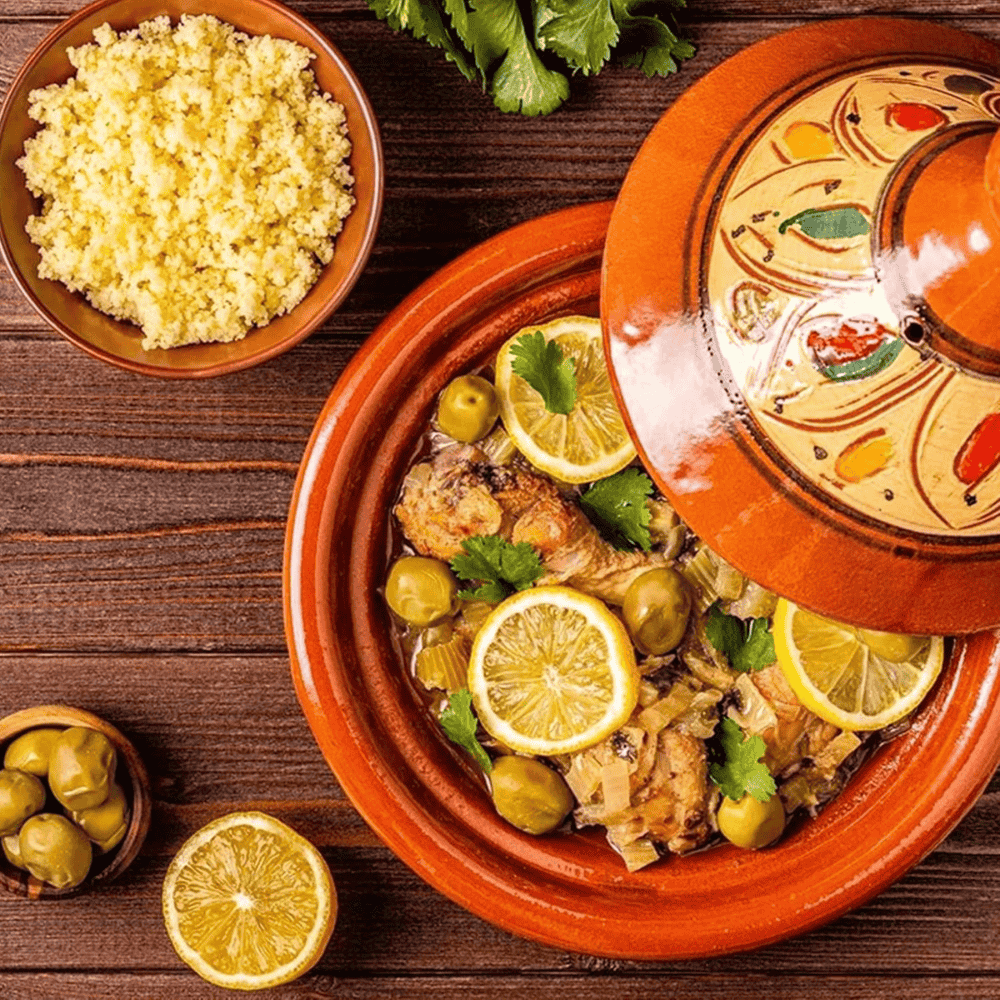
A Moroccan tagine is suitable for a range of recipes built around vegetables, meat, poultry, spices, and flavorful sauces. Chicken with preserved lemon and olives is a familiar Moroccan combination, balancing savory poultry with citrus and briny seasoning. Lamb with prunes combines slow-cooked meat with dried fruit and warm spices for a dish that balances sweet and savory flavors. Vegetable tagines can feature potatoes, carrots, zucchini, tomatoes, chickpeas, and seasonal produce seasoned with cumin, coriander, paprika, or ginger.
The pot also provides room to adapt recipes to personal preferences. For a vegetarian meal, combine chickpeas with vegetables and a well-seasoned tomato-based sauce. For a simple family dinner, layer sliced onions, potatoes, carrots, and chicken with olive oil, garlic, herbs, and spices. Add liquid in moderation and allow the ingredients to cook gradually. Exact quantities and cooking times depend on the recipe and the tagine’s capacity. Verve CULTURE’s product description mentions included recipes, but buyers should check the package contents to confirm which recipe materials accompany the item.
- Chicken with preserved lemon and olives.
- Lamb with prunes and warm spices.
- Vegetarian tagines with chickpeas and seasonal vegetables.
How Does the Tagine Work as a Serving Dish?
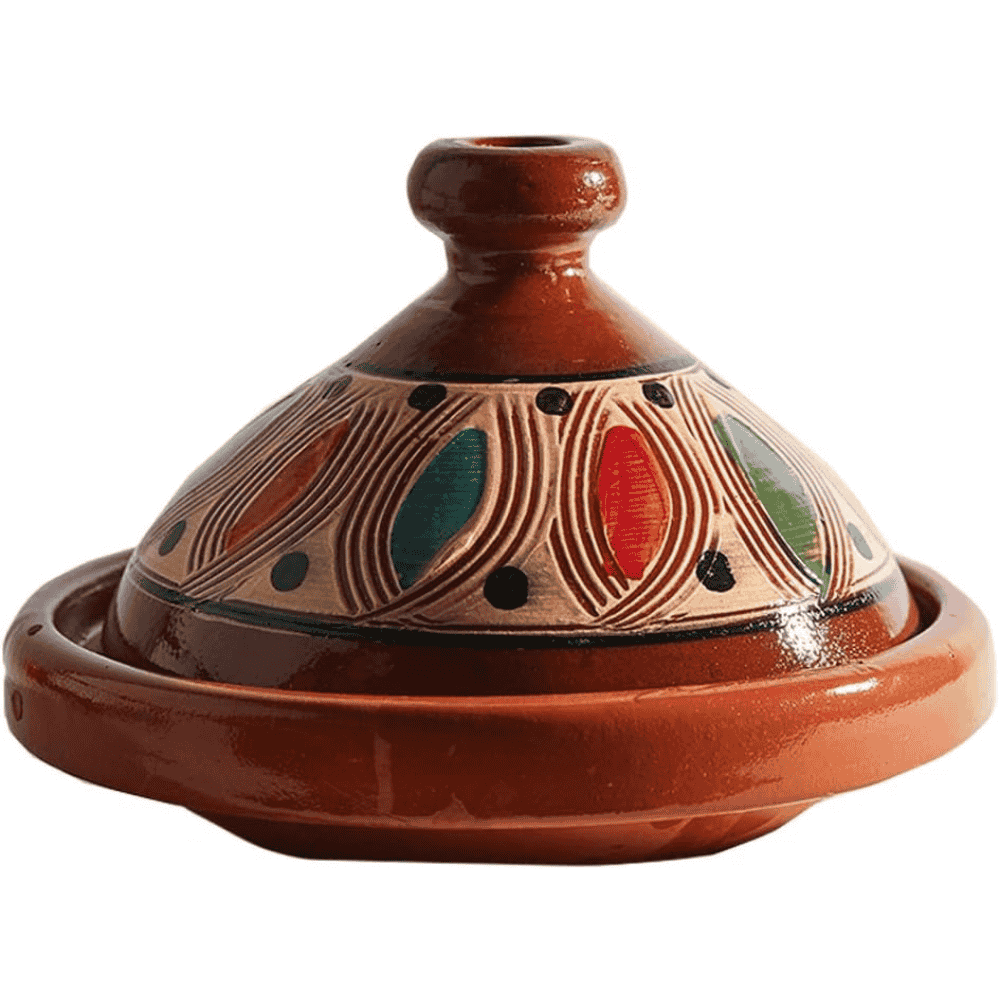
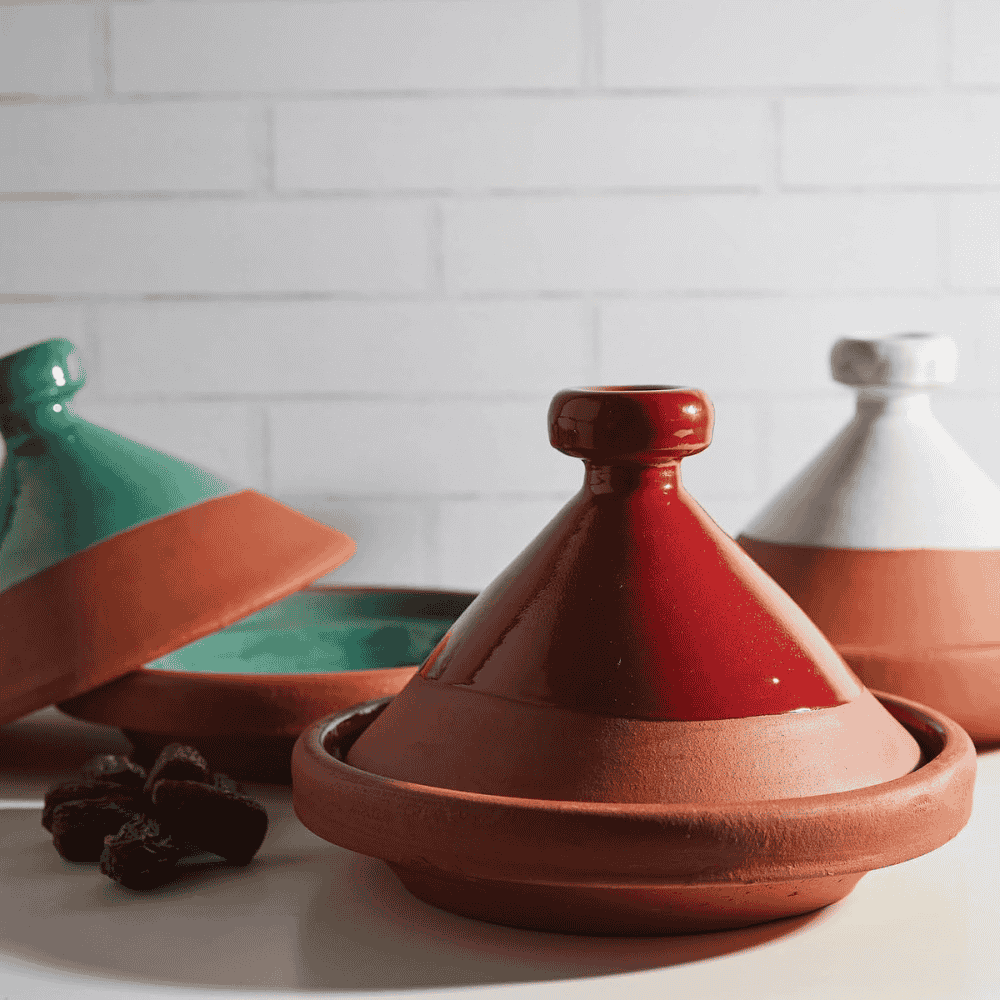
The Verve CULTURE tagine combines a cooking vessel with a traditional serving presentation. Its conical lid creates a recognizable silhouette, while the decorative glaze adds color to a dining table. After cooking, the pot can help keep a dish warm for serving, provided it is handled safely and the manufacturer’s instructions permit the intended use. Bringing the tagine directly to the table also allows guests to see the finished dish in its traditional vessel, making it suitable for family dinners, weekend meals, and gatherings inspired by Moroccan cuisine.
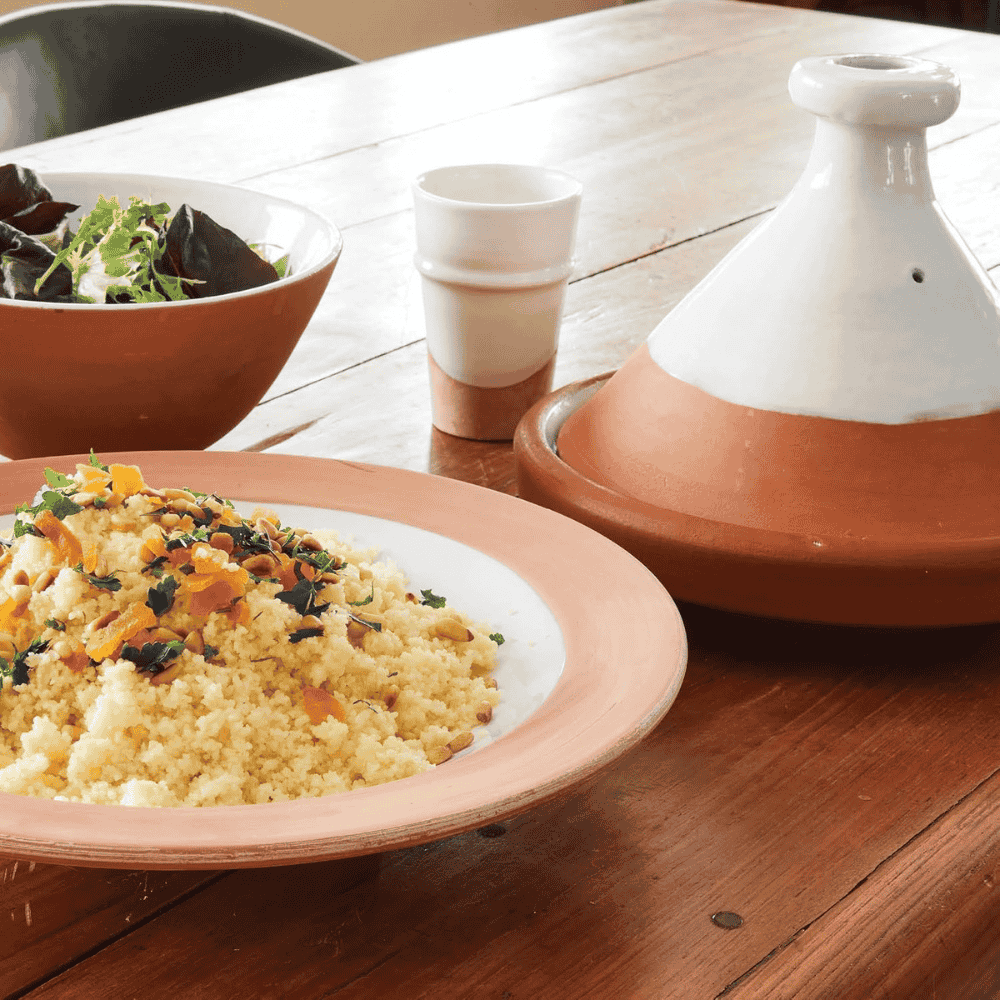
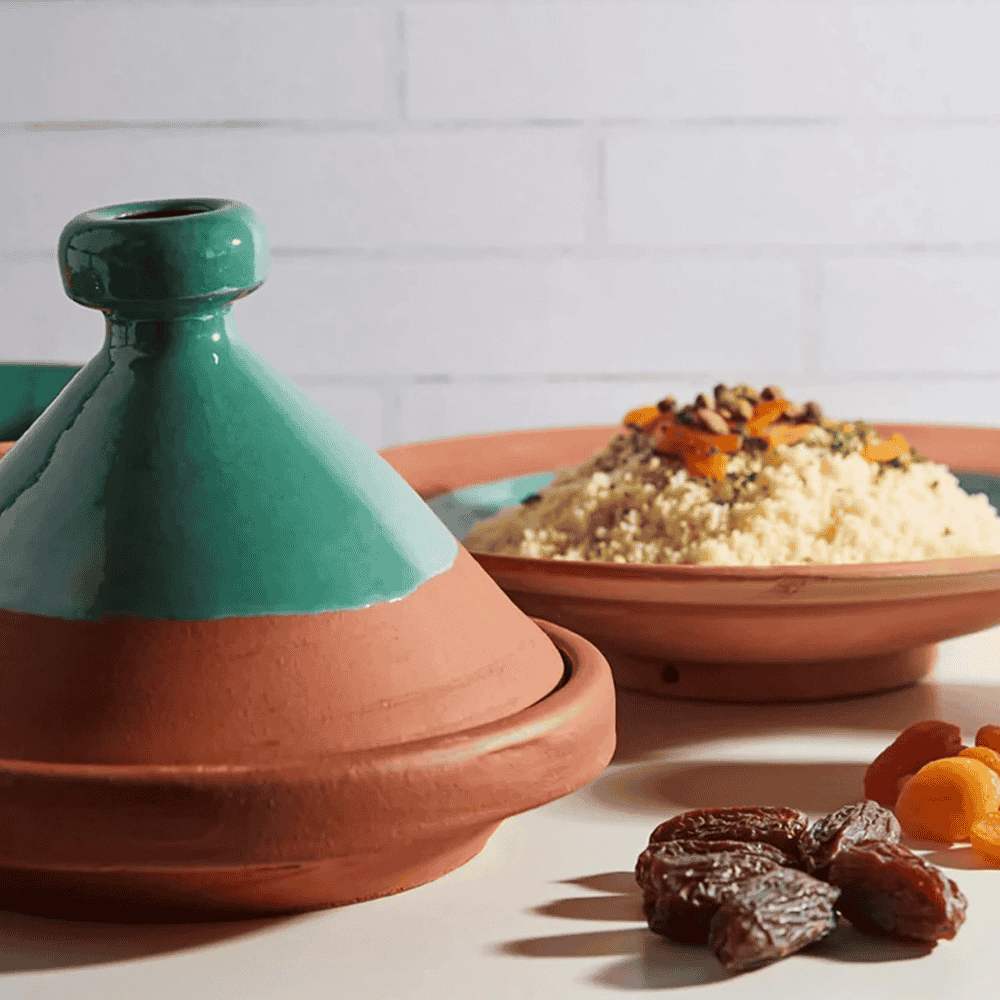
For a practical serving arrangement, place the tagine on a stable, heat-resistant trivet and remove the lid carefully to avoid escaping steam. Use suitable utensils to serve the food and avoid setting a hot clay vessel directly on a delicate table surface. The white, teal, and traditional color options listed for this product offer different decorative styles, although the exact finish available may depend on the selected variant. Pair the tagine with simple ceramic plates, bread, salads, or small side dishes to create a coordinated meal without overcrowding the table.
- Combines cooking and serving functions.
- Decorative glaze complements Moroccan-inspired table settings.
- Use a heat-resistant trivet and handle the lid carefully.
What Details Define Its Handcrafted Moroccan Design?
Each Verve CULTURE Moroccan tagine is described as individually formed from clay sourced from Morocco’s Wadi Lan region and finished with a hand-painted, lead-free glaze. The handmade process gives the pot an individual appearance that may differ slightly from other pieces. Small variations in color, surface details, or painted patterns can be part of handcrafted pottery rather than signs of a factory-produced finish. Buyers who appreciate traditional ceramics may value these differences because they reflect the individual work involved in shaping and decorating the vessel.
The glazed surface also contributes to the tagine’s appearance as a kitchen and dining accessory. Its traditional Moroccan styling can complement rustic kitchens, colorful tableware, or more neutral interiors. However, the decorative finish should not be confused with proof that the pot is suitable for every cooking method. Buyers should follow the care and heating guidance supplied with the product to protect the glaze and clay body. The listed lead-free glaze is a stated product feature; for further assurance about material compliance, consult the manufacturer for any available documentation.
- Handcrafted Moroccan pottery.
- Clay associated with the Wadi Lan region.
- Hand-painted, lead-free glaze according to the product information.
What Are the Tagine’s Dimensions, Weight, and Practical Uses?
The Verve CULTURE Moroccan Tagine Pot is described in its product title as approximately 9 inches tall and 11 inches in diameter. The technical information also lists dimensions of 10 x 10 x 7 inches, a 10-inch diameter, and a weight of 7.4 pounds. These measurements do not fully match, so buyers should verify the exact dimensions of the selected version before purchasing, especially if the pot must fit inside a cupboard, on a shelf, or within a particular cooking area. The stated weight is also worth considering when moving the pot between the kitchen and dining table.
Because a tagine includes both a base and a tall lid, its storage requirements differ from those of a shallow frying pan or ordinary casserole. Measure the available cupboard height and width before choosing a storage location. Keep the lid and base secure during handling, and avoid stacking heavy cookware on top of the glazed surface. The product description does not establish a confirmed food capacity in liters or quarts, so the outside measurements should not be used to assume a precise serving count. Check the manufacturer’s specifications if capacity is important for meal planning.
- Listed weight: 7.4 pounds.
- Dimensions vary across the supplied product specifications.
- Check storage clearance and cooking capacity before buying.
How Should You Use and Care for a Moroccan Tagine?
Proper care helps preserve the appearance and function of clay cookware. Before cooking, read the instructions supplied with the tagine to determine whether the vessel needs any initial preparation and which heat sources are permitted. If the manufacturer recommends gradual heating, begin at a low setting and increase the temperature slowly. Do not move the pot directly from a refrigerator into a hot oven or place a hot tagine on a cold countertop. Sudden temperature changes can cause thermal shock, potentially leading to cracks or other damage.
After cooking, allow the tagine to cool naturally before washing it. Use a soft sponge, warm water, and a suitable mild cleaning product if permitted by the manufacturer’s instructions. Avoid abrasive pads that may scratch the glaze, and do not assume the pot is dishwasher-safe unless the manufacturer confirms it. Dry the vessel thoroughly before storing it to reduce trapped moisture. If cracks, chips, or glaze damage develop, stop using the pot for food preparation until its safety has been assessed. Following these precautions supports longer use while protecting the handcrafted finish.
- Check manufacturer instructions for heating and initial preparation.
- Avoid sudden temperature changes.
- Clean gently and dry thoroughly before storage.
What Should You Know About Stovetop and Oven Compatibility?
The product description states that the tagine is designed for stovetop and oven use, but compatibility depends on the exact construction of the base and the manufacturer’s approved instructions. Traditional clay cookware does not automatically work with every modern cooking surface. Induction cooktops, for example, generally require compatible magnetic cookware or a specifically approved adapter. Gas burners and electric heating elements can also expose clay to concentrated heat, so the permitted heat level and any need for a diffuser should be confirmed before use.
Before preparing a recipe, verify the maximum oven temperature, permitted burner types, and whether the lid and base can both be used in the oven. Follow the stated temperature limits rather than relying on general guidance for other clay pots. Use oven mitts when handling the vessel and keep it on a stable surface. If compatibility information is missing from the package or product listing, contact Verve CULTURE for clarification. These checks help avoid damage and make it easier to determine whether the tagine fits the equipment already available in the kitchen.
- Confirm approved stovetop types before heating.
- Check maximum oven temperature and lid compatibility.
- Do not assume induction compatibility without manufacturer confirmation.
Why Consider a Moroccan Tagine as a Kitchen Gift?
A Moroccan tagine can be a thoughtful gift for someone interested in cooking, pottery, or North African food traditions. Its distinctive shape makes it recognizable, while its cooking function gives it a practical purpose beyond decoration. It may suit housewarming celebrations, birthdays, wedding gifts, or occasions for someone who enjoys experimenting with regional recipes. The white, teal, and traditional color options provide different visual styles, subject to availability, and the handmade finish gives each piece an individual character.
The product information also states that Verve CULTURE is a women-owned company that works directly with Moroccan artisans. According to the brand, its tagines support artisans who preserve traditional pottery techniques. This background may appeal to buyers who value the cultural history behind kitchenware as well as its everyday use. Before gifting the pot, consider the recipient’s available storage space, cooking equipment, and willingness to care for clay cookware. A suitable recipe book, Moroccan spices, or serving accessories can complement the gift, provided these additional items are purchased separately when not included.
- Suitable for cooking enthusiasts and collectors of handcrafted ceramics.
- Offers a traditional Moroccan design for kitchen and table use.
- Brand-reported connection to Moroccan artisans and traditional pottery.
Which Features Matter Most When Choosing This Moroccan Tagine?
The Verve CULTURE Moroccan Tagine Pot combines a clay body, a conical lid, and a decorative glazed finish in a vessel intended for traditional slow cooking and serving. Its main appeal lies in the way the shape supports moisture circulation, the way clay retains heat, and the visual character of handcrafted Moroccan pottery. It can suit cooks who regularly prepare stews, braised vegetables, chicken, or lamb and who want a serving piece that reflects the traditions associated with these dishes.
Before ordering, compare the stated dimensions carefully because the product title and technical specifications provide different measurements. Confirm the cooking surfaces the pot supports, its maximum oven temperature, its capacity, and the recommended cleaning method. These practical details matter as much as appearance when choosing clay cookware. For buyers who have suitable cooking equipment and are willing to follow the care instructions, the tagine offers a way to explore traditional Moroccan recipes while adding a distinctive ceramic vessel to the kitchen. GiftsMorocco can present Moroccan kitchenware as part of a wider interest in the country’s culinary heritage, provided the exact item and availability are confirmed.
- Traditional Moroccan tagine design and clay construction.
- Useful for slow-cooked recipes and serving at the table.
- Verify dimensions, capacity, and heat-source compatibility before purchase.


Reviews
There are no reviews yet.